Happy birthday in Cantonese: what to say, sing and write
How to say happy birthday in Cantonese, sing it, write it in a card and wish grandparents a long life, plus the one gift Hong Kongers never give.
Many happy returns:
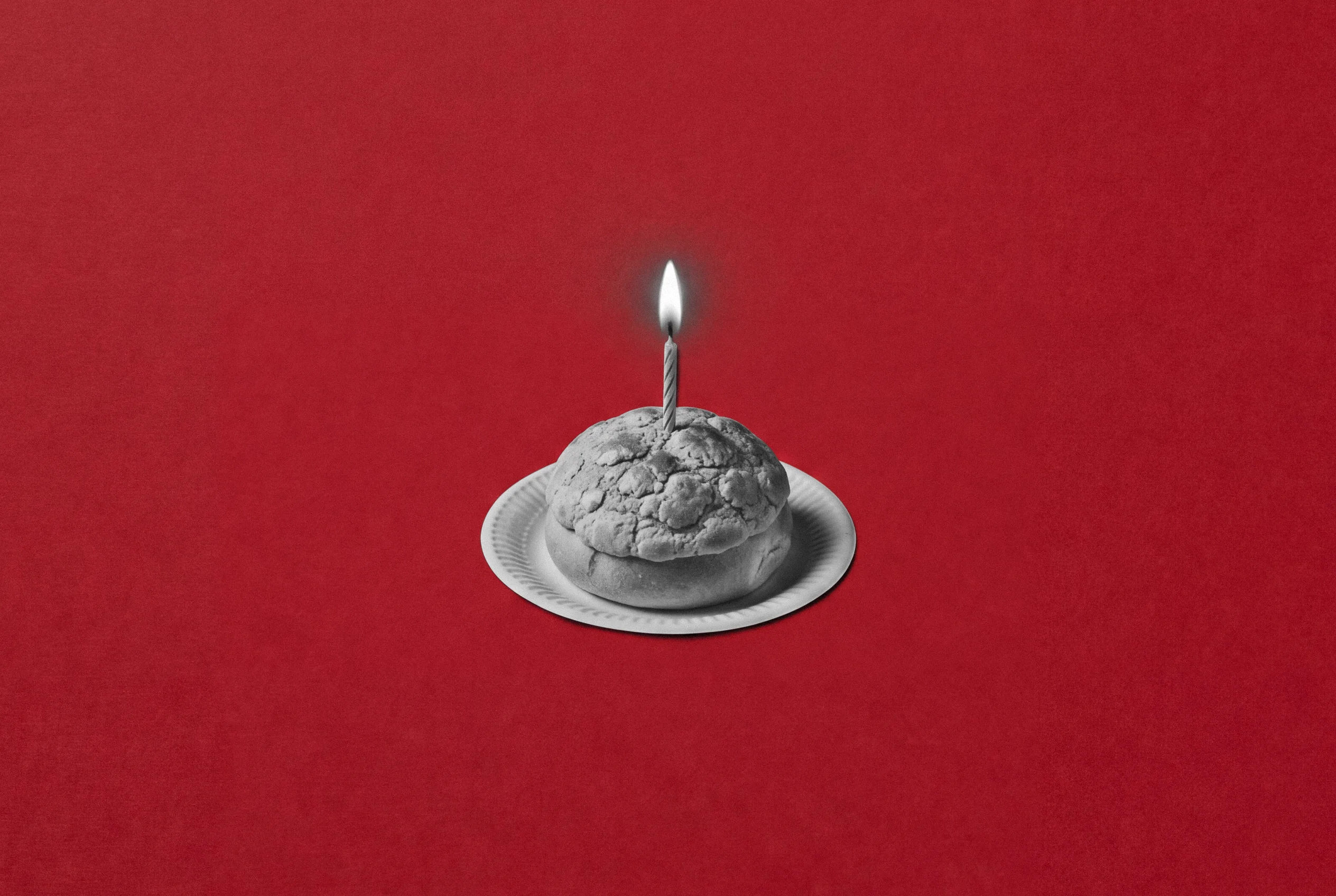
No cake? In Hong Kong, a pineapple bun and one candle will do the job.
Key takeaways
The Cantonese for happy birthday is 生日快樂 (
saang1 jat6 faai3 lok6). It works for everyone, from your best friend to your boss.The happy birthday song uses the familiar tune, with 祝你生日快樂 (
zuk1 nei5 saang1 jat6 faai3 lok6) on every line. Elders may also get the traditional 恭祝你福壽與天齊.Add a wish that fits the person: good health for grandparents, success at school for children, smooth work for colleagues.
Elders celebrate milestones with longevity noodles and peach-shaped buns. Never give a clock.
To wish someone a happy birthday in Cantonese, say 生日快樂 (saang1 jat6 faai3 lok6). 生日 (saang1 jat6) means birthday, literally “birth day”, and 快樂 (faai3 lok6) means happy. It’s the line you’ll read on every cake, card and WhatsApp message in Hong Kong, and if you only learn one phrase from this guide, make it this one.
A good wish rarely stops there, though. Hong Kongers like to add a second line that suits the person they’re talking to, and the bigger the milestone, the more ceremony there is. Whether you’re texting a friend, writing a card to a grandparent or heading to your first banquet, this guide covers the phrase itself, the songs, the right wish for each person, what to write, how to reply and the customs around big milestones.
How to say happy birthday in Cantonese
Cantonese is a tonal language, so the pitch of each syllable changes its meaning, and 生日快樂 has four syllables and three different tones. It’s good practice. 生 (saang1) sits high and level. 日 (jat6) drops low and stays there. 快 (faai3) is mid level, and 樂 (lok6) finishes low. Say it slowly, keeping each syllable flat, and resist the urge to let your voice rise and fall the way it does in English.
Hong Kong writes Cantonese in traditional Chinese characters, so you’ll see 生日快樂. In simplified characters, used in mainland China, it’s 生日快乐: only the last character changes. If you’ve learned some Mandarin, you’ll recognise the phrase: the characters are the same. The Mandarin, shēngrì kuàilè, sounds quite different, though, so in Hong Kong or with relatives from there, use the version above. Our comparison of the two languages explains why the two languages share a script but not a sound.
If the tones are new to you, our guide to the six tones explains each of them, and how the Jyutping numbers map onto your voice. Jyutping is the romanisation used throughout, and it’s worth learning properly: our beginner’s guide to Jyutping covers it in one sitting.
You may also hear 生辰快樂 (saang1 san4 faai3 lok6). 生辰 is a literary way to say the day you were born, so this version sounds a little grand or old-fashioned. It turns up in TV dramas and on formal cards, often with a wink. In everyday speech, stick to 生日快樂.
The happy birthday song in Cantonese
When the cake comes out, everyone sings along to the tune you already know, with local lyrics:
祝你生日快樂 (zuk1 nei5 saang1 jat6 faai3 lok6)
祝你生日快樂
祝你生日快樂
祝你生日快樂
祝你 (zuk1 nei5) means “wishing you”, so each line is simply “wishing you a happy day”. Yes, all four lines are the same. Where English swaps in the person’s name on the third line, Cantonese usually doesn’t bother, which makes it the easiest song you’ll ever learn. At a Hong Kong party, plenty of groups sing it in English first and Cantonese second, or the other way round.
Then the 壽星 (sau6 sing1), the person whose big day it is, makes a wish, 許願 (heoi2 jyun6), and blows out the candles, 吹蠟燭 (ceoi1 laap6 zuk1). Someone is bound to tell them not to say the wish out loud.
The traditional song for elders
At a grandparent’s banquet you may hear an older song instead, sung to its own tune. It opens with 恭祝你福壽與天齊 (gung1 zuk1 nei5 fuk1 sau6 jyu5 tin1 cai4), “we wish you fortune and long life as lasting as the sky”, and goes on to wish that the same happy day comes round year after year, 年年都有今日 (nin4 nin4 dou1 jau5 gam1 jat6). It’s old-fashioned, a little sentimental, and grandparents tend to know every line.
Birthday phrases for different people
A second line makes your wish sound warmer and more natural. These four-character phrases are set expressions, so you can use them as they are. Put them after 生日快樂, or start with 祝你 to make them “wishing you…”.
For grandparents and older relatives
身體健康 (san1 tai2 gin6 hong1) means good health, and it’s the safest wish you can give anyone older than you. 生日快樂,身體健康 is the classic pairing, printed on cards in every Hong Kong stationery shop.
For a really special occasion, there’s the old blessing you might read on a banquet banner, 福如東海,壽比南山 (fuk1 jyu4 dung1 hoi2, sau6 bei2 naam4 saan1): “may your good fortune be as vast as the Eastern Sea, and your life as long as the Southern Mountain”. It’s formal and a bit theatrical, and grandparents tend to love it.
For friends
心想事成 (sam1 soeng2 si6 sing4) means “may everything you wish for come true”. It’s friendly, positive and fits almost any age. For a friend who might be counting the years, 青春常駐 (cing1 ceon1 soeng4 zyu3), “stay forever young”, is a cheeky compliment.
For children
長命百歲 (coeng4 meng6 baak3 seoi3) wishes a child a life of a hundred years. For school-age children, parents and relatives often add 學業進步 (hok6 jip6 zeon3 bou6), “progress in your studies”. Children may not thank you for that one.
For colleagues
工作順利 (gung1 zok3 seon6 lei6) means “may your work go smoothly”, and it keeps your message friendly but professional. In many Hong Kong offices, someone buys a cake, the team sings in the pantry, and everyone is back at their desk ten minutes later. It’s the shortest birthday party you’ll ever attend. Our guide to Cantonese phrases for work has more for office life.
What to write in a card or message
For a card, a simple structure works well: the person’s name or title, then your wishes, then your name. To a grandmother, for example:
嫲嫲:
祝你生日快樂,身體健康!
嫲嫲 (maa4 maa4) is your father’s mother. If you’re not sure what to call each relative, our guide to family terms sorts out who is who.
On WhatsApp, people keep it short. 生日快樂! with a cake emoji is perfectly normal, and younger people often just send “HBD”. If you’ve missed the day, 遲咗少少,生日快樂! (ci4 zo2 siu2 siu2, saang1 jat6 faai3 lok6) means “a little late, but happy birthday!”.
How to reply to good wishes
The simplest reply is 多謝 (do1 ze6), thank you. To thank everyone at once, for example in a group chat full of good wishes, say 多謝晒 (do1 ze6 saai3), “thanks, all of you”. If someone hands you a present, 多謝 is still the right choice. Our article on how to say thank you in Cantonese explains when to use 多謝 and when to use 唔該.
Big birthdays for elders
For grandparents and older relatives, milestones are a much bigger affair. A major one, usually from sixty onwards, is called 大壽 (daai6 sau6), and to celebrate it is 做壽 (zou6 sau6). 壽星, the name for the guest of honour, literally means “longevity star”.
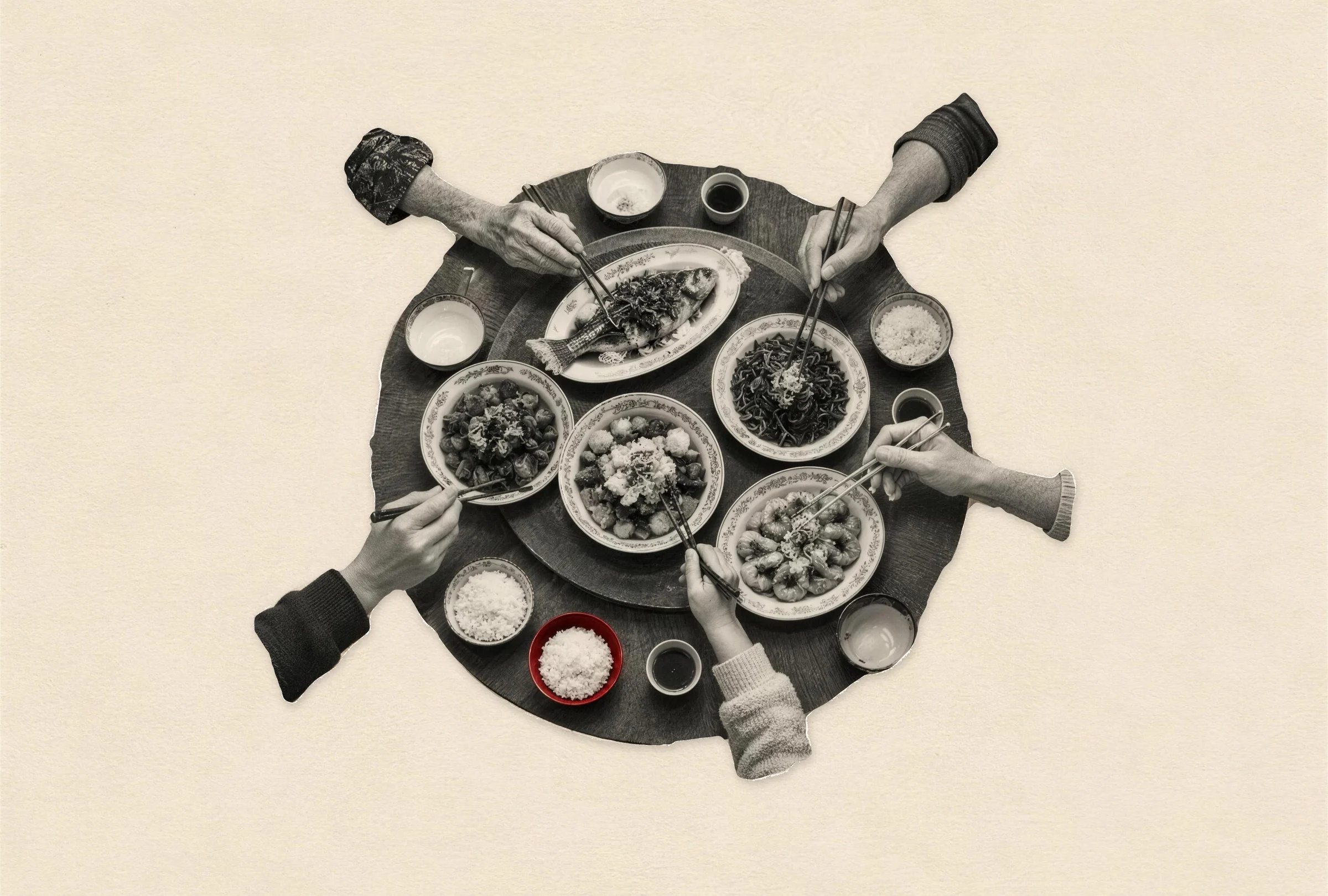
Most families mark the occasion with a banquet at a Chinese restaurant, and two Chinese traditions almost always appear on the table:
Longevity noodles, 長壽麵 (
coeng4 sau6 min6). Long noodles stand for a long life, so they’re served uncut. Cutting them is bad luck.Longevity buns, 壽包 (
sau6 baau1). Soft steamed buns shaped and coloured like peaches, a symbol of long life, usually filled with lotus seed paste.

Some families follow a custom of celebrating the ninth year rather than the tenth, so a sixtieth might be celebrated at fifty-nine. Nine, 九 (gau2), sounds like 久 (gau2), “a long time”, while a round ten feels complete, as if nothing more is to come. It isn’t universal, so if you’re invited to a banquet for an uncle’s fifty-ninth, now you know why.
Some older Hong Kongers also keep their 農曆生日 (nung4 lik6 saang1 jat6), their date of birth on the lunar calendar, which falls on a different date each year. It’s worth asking.
The present to avoid
Never give a clock. 送鐘 (sung3 zung1), “to give a clock”, sounds exactly like 送終 (sung3 zung1), to be with someone at the end of their life. On the day you celebrate someone’s life, that’s a gift nobody wants to unwrap. Watches are generally fine, but if the person is older or traditional, choose something else.
And save 恭喜發財 (gung1 hei2 faat3 coi4) for Chinese New Year. 發財 means to get rich, and while nobody would mind the sentiment, it’s a New Year greeting, not a birthday one. Our guide to Chinese New Year greetings explains where it belongs.
A present is a 禮物 (lai5 mat6), and good choices are the same as anywhere: something to eat, something to wear, or a meal out together.
Useful phrases for a birthday party
Is it your birthday today? 今日係咪你生日呀? (
gam1 jat6 hai6 mai6 nei5 saang1 jat6 aa3)When’s your birthday? 你幾時生日呀? (
nei5 gei2 si4 saang1 jat6 aa3)How old are you this year? 你今年幾多歲呀? (
nei5 gam1 nin4 gei2 do1 seoi3 aa3). Fine for children. With adults, tread carefully.Birthday cake: 生日蛋糕 (
saang1 jat6 daan6 gou1)Present: 生日禮物 (
saang1 jat6 lai5 mat6)Birthday party: 生日會 (
saang1 jat6 wui2)Make a wish: 許願 (
heoi2 jyun6)
Numbers come in handy for ages and dates, and our numbers guide will get you counting candles in no time.
Say it, then say a little more
生日快樂 will carry you through any celebration in Hong Kong. Add 身體健康 for a grandparent, 心想事成 for a friend or 工作順利 for a colleague, and you’ll sound like someone who knows the culture, not just the phrasebook. And if the cake arrives before you’ve practised, just join in on the second round of the song. Everyone else is singing the same line four times anyway.
How good is your Cantonese?
Five quick questions to see where your Cantonese is at.
Question 1 of 5. The waiter brings your food. What do you say?
Heading to Hong Kong? Survival Cantonese gets you speaking the phrases you’ll actually use, in one-to-one lessons shaped around your trip.
Book a £30 trial lesson
Book a £30 trial lesson