Skip to content

Chinese New Year greetings in Cantonese: what to say, and to whom

What to say at Chinese New Year in Cantonese, and to whom: 恭喜發財 and how to answer it, greetings for elders, kids and colleagues, and the 利是 rules.

A black-and-white cut-out of a young girl in a padded jacket, grinning as she holds a red packet up beside her face with both hands, in front of a torn-paper photograph of fireworks over Victoria Harbour, on cream paper.

Red packet season:

Both hands, one red packet, and the grin of someone who knows exactly what’s inside.

Key takeaways

  • 恭喜發財 (gung1 hei2 faat3 coi4) is the greeting everyone knows. Say it straight back, or reply 大家咁話, “same to you”.

  • Add a second wish to fit the person: 身體健康 for elders, 學業進步 for children, 生意興隆 for clients and 萬事如意 for friends.

  • Married people give 利是 and unmarried people receive. Use both hands, new notes and even amounts, and skip anything with a 4.

  • Steer clear of words linked to death or loss, and if one slips out, 啋!大吉利是! cancels it.

  • Lunar New Year 2027 starts on Saturday 6 February, the Year of the Goat. There’s no 年三十 this time, so the eve is 年廿九晚.

Ask most people for Chinese New Year greetings and they’ll know one Cantonese phrase: 恭喜發財 (gung1 hei2 faat3 coi4), the Kung Hei Fat Choy on every red banner from Causeway Bay to Chinatown. It’s a good phrase. It’s also only the start. In Hong Kong, the greeting you give depends on who’s in front of you: your grandmother gets a different wish from your boss, and a ten-year-old gets something different again.

This guide covers the Chinese New Year greetings Cantonese speakers actually use, who to say them to, and the rules of the red packet that comes with almost every one. It matters because New Year is when Cantonese is everywhere: in the lift, at the office, around the family table. A few well-chosen wishes will win you more goodwill than a year of polite English.

Lunar New Year 2027 falls on Saturday 6 February, the start of the Year of the Goat.

The one greeting everyone knows: 恭喜發財

恭喜發財 literally means “congratulations, and get rich”. 恭喜 is to wish someone joy; 發財 is to make a fortune. It sounds blunt in English, but in Hong Kong it’s simply warm: you’re wishing someone prosperity in the year ahead, and nobody thinks you’re being mercenary.

You’ll see it spelt Kung Hei Fat Choy, Gung Hay Fat Choy and several other ways, because older romanisations varied. The Mandarin version, Gōngxǐ fācái, is written the same way but sounds quite different. If you’re in Hong Kong, or with Cantonese-speaking family anywhere in the Chinese diaspora, the Cantonese is the one people will expect. It has long been the New Year language of Chinatowns from London and Manchester to Vancouver and San Francisco.

When someone says it to you, the easiest answer is to say it straight back. You can also reply with a relaxed 大家咁話 (daai6 gaa1 gam3 waa6), roughly “same to you”, or literally “everyone says the same”. It’s friendly, very Hong Kong, and saves you thinking of a new wish every time someone greets you in a lift.

A shorter option is 恭喜恭喜 (gung1 hei2 gung1 hei2), the same word twice, which works well when you’re passing someone and only have a second. And for a plain “happy new year”, there’s 新年快樂 (san1 nin4 faai3 lok6), often written sun nin fai lok. It’s fine, especially in writing, but face to face in Hong Kong, 恭喜發財 is far more common.

What to say, and to whom

Most Chinese New Year greetings in Hong Kong are four-character wishes, and people often stack two together, starting with 恭喜發財 and adding one that suits the person. You don’t need a long list of year phrases. One or two good matches will make you sound like you’ve done this before.

Grandparents and older relatives

For anyone older, wish them health. 身體健康 (san1 tai2 gin6 hong1), often written sun tai gin hong, means “good health”, and it’s the safest wish there is: no grandparent has ever been offended by it. For a long and happy old age, 長命百歲 (coeng4 meng6 baak3 seoi3), “live to a hundred”, is a lovely one for the oldest person at the table.

For an older relative who’s still full of energy, try 龍馬精神 (lung4 maa5 zing1 san4), “the spirit of a dragon and a horse”. It means “stay full of vigour”, and it tends to go down very well with the uncle who still hikes Lion Rock every Sunday. If you’re not sure who’s who around the table, our guide to Cantonese family terms will help you greet people correctly before you get to the wishes.

Children and teenagers

Adults wish children two things: growing up and doing well at school. 快高長大 (faai3 gou1 zoeng2 daai6) means “grow tall and big quickly”, best for little ones. 學業進步 (hok6 jip6 zeon3 bou6), “progress in your studies”, suits school-age children, who will hear it from every adult they meet and may roll their eyes a little.

Children have their own line, too. 恭喜發財,利是逗來 (gung1 hei2 faat3 coi4, lai6 si6 dau6 loi4) means “happy new year, now hand over the red packet”. Kids say it with a grin; adults laugh and hand one over. It’s cheeky, and it’s for children only.

Your boss, colleagues and clients

At work, wish people success. 生意興隆 (saang1 ji3 hing1 lung4), “may business flourish”, is the classic for shop owners, clients and anyone who runs a company. 財源滾滾 (coi4 jyun4 gwan2 gwan2), “may wealth roll in”, does a similar job with more swagger. You’ll see both on signs in shop windows across Hong Kong in the weeks around the New Year.

For a colleague, 步步高升 (bou6 bou6 gou1 sing1), “rise step by step”, wishes them a promotion. Say it to a peer, not to your boss, unless you want to suggest they’re overdue for a move. If you work with Cantonese speakers, our guide to Cantonese phrases for work covers the everyday office language around these greetings.

Friends and everyone else

For friends, neighbours and the person at the next desk, a few all-purpose wishes do the job. 萬事如意 (maan6 si6 jyu4 ji3) means “may everything go as you wish”. 心想事成 (sam1 soeng2 si6 sing4) means “may your wishes come true”. 大吉大利 (daai6 gat1 daai6 lei6), “great luck and great profit”, is a cheerful one for anyone.

For someone who drives, travels a lot or is about to fly home, 出入平安 (ceot1 jap6 ping4 on1), often written chut yup ping on, wishes them “safety coming and going”. You’ll see it on red charms hanging in Hong Kong taxis all year round.

Wishes on the dinner table

Some greetings come with the food. 年年有餘 (nin4 nin4 jau5 jyu4), often written nin nin yau yu, means “a surplus year after year”, and it’s why a whole fish appears at so many New Year meals: 魚 (fish) and 餘 (surplus) are both pronounced jyu4. Many families leave a little of the fish uneaten, so there’s something left over. 年糕 (nin4 gou1), the sticky New Year cake, works the same way, because 糕 sounds like 高, “high”, so you eat your way to a higher year.

From the Horse to the Goat

Each year brings its own wordplay, based on that year’s animal. 2026 is the Year of the Horse, so until New Year’s Eve you’ll still hear 馬到功成 (maa5 dou3 gung1 sing4), “success as soon as the horse arrives”. In the Year of the Goat, the favourite is 三羊開泰 (saam1 joeng4 hoi1 taai3), “three goats bring good fortune”. It’s a pun on an older phrase, 三陽開泰, because 羊 (goat) and 陽 (sunshine, the yang of yin and yang) are both pronounced joeng4. You’ll see it on cards and shop banners in early 2027, and using it shows you’ve noticed what year it is.

利是: the red packet rules

Almost every greeting at New Year comes with, or is answered by, a red packet. In Hong Kong it’s called 利是 (lai6 si6), usually spelt lai see in English, and sometimes written 利市. Elsewhere you’ll hear them called red envelopes, or by the Mandarin word, 紅包 (hongbao), which is understood but much less common in Hong Kong.

Red is the colour of luck and celebration. In folk legend, red and the noise of firecrackers scared off 年 (nian), a monster that came out at the turn of the year, and red envelopes still carry that sense of protection and good fortune.

Who gives, and who receives

The rule is simple: married people give, unmarried people receive. In practice, elders and married couples give red envelopes to children and the younger generation. That includes unmarried adults: a 35-year-old single cousin can still expect red packets from married relatives, and won’t be expected to give any. Once you marry, you switch sides.

Bosses usually give lai see to their staff after the holiday, and many residents give a packet to the security guards, cleaners and doormen in their building. Families with domestic helpers usually give them one too. Giving out red packets is 派利是 (paai3 lai6 si6). Collecting them, usually by visiting relatives, is 逗利是 (dau6 lai6 si6).

How to give and receive

Hand red envelopes over with both hands, and say a greeting as you do it: 恭喜發財 plus a wish that fits the person. When you’re receiving lai see, take it with both hands, say thank you, 多謝晒 (do1 ze6 saai3), and add a wish of your own. Don’t open it in front of the person who gave it. Our guide to saying thank you in Cantonese explains why it’s 多謝 here, not 唔該.

How much money goes inside

There’s no fixed amount, and much of the meaning is in the gesture itself. In Hong Kong, the cash usually ranges from a HK$20 note for acquaintances and building staff to a few hundred dollars, or more, for close family. The HK$20 and HK$50 notes do most of the work. Even amounts are preferred, because good things come in pairs, 好事成雙 (hou2 si6 sing4 soeng1), so most people avoid odd numbers. Avoid any amount with a 4 in it, too, because 四 (sei3) sounds close to 死 (sei2), death. Our guide to numbers in Cantonese explains why 8 is lucky and 4 isn’t. Coins don’t go in red packets: it’s always paper money.

New, crisp notes are part of the gesture, which is why Hong Kong’s banks see queues in the weeks before New Year. The Hong Kong Monetary Authority also encourages people to use good-as-new notes, and the younger generation increasingly sends electronic lai see by phone, though a paper packet in the hand still feels like the real thing.

Words to avoid, and how to undo them

New Year is the one time of year when Hong Kongers really watch their words. Anything that sounds like death, illness or loss is best left until the holiday is over. 輸 (syu1), “to lose”, sounds the same as 書, “book”, which is why some people avoid buying books during the New Year period. And many people won’t wash their hair on New Year’s Day, because 髮 (faat3), hair, sounds like the 發 in 恭喜發財: wash it, and you wash away your luck.

If someone does say something that invites bad luck, there’s a quick fix. 啋!大吉利是! (coi1! daai6 gat1 lai6 si6!) works like “touch wood”, said to cancel it out. Notice the 利是 in the middle: it’s the same lucky word as the red packet. And if a bowl smashes on the kitchen floor, someone will say 落地開花,富貴榮華 (lok6 dei6 hoi1 faa1, fu3 gwai3 wing4 waa4): “it hit the ground and blossomed; wealth and glory”, which turns an accident into a blessing.

The days that matter

Lunar New Year in Hong Kong isn’t a single day. These are the dates people talk about, using the 2027 calendar.

  • New Year’s Eve, Friday 5 February. It’s usually called 年三十晚 (nin4 saam1 sap6 maan5), “the night of the thirtieth”, but in 2027 there isn’t a thirtieth: the last lunar month has only 29 days, and the Hong Kong Observatory points out there’s no 年三十 at all from 2025 to 2029. So people say 年廿九晚 (nin4 jaa6 gau2 maan5), “the night of the twenty-ninth”, instead. Families gather for 團年飯 (tyun4 nin4 faan6), the reunion dinner, and many people head to a 年宵 (nin4 siu1) flower fair afterwards. Victoria Park hosts the biggest.

  • 年初一 (nin4 co1 jat1), the first day, Saturday 6 February. The day for 拜年 (baai3 nin4), visiting relatives, starting with the oldest. No sweeping, in case you sweep the luck out of the door.

  • 年初二, the second day. Known as 開年 (hoi1 nin4), the “opening of the year”, with a big family meal. Hong Kong has traditionally held its fireworks over Victoria Harbour on the second night.

  • 年初三, the third day. This is 赤口 (cek3 hau2), “red mouth” day, when arguments are said to be more likely. Many people skip visiting and stay at home.

  • 元宵 (jyun4 siu1), the Lantern Festival, on the fifteenth day. It closes the season, and it’s traditionally the last day for giving lai see, so the first few days are when most red packets change hands.

Because the second day falls on a Sunday, Hong Kong’s 2027 public holidays are the Saturday, Monday and Tuesday.

Putting it together

Picture New Year’s Day. You arrive at your grandmother’s flat, hand over a red packet with both hands and say 恭喜發財,身體健康. Your nephew greets you with 恭喜發財,利是逗來 and gets one too. Back at work on Wednesday, the Chinese New Year greetings carry on: it’s 恭喜發財,步步高升 to the colleague at the next desk, and 大家咁話 to everyone who says it to you first.

Cantonese is a tonal language, so the same syllable can mean different things depending on its pitch. That’s exactly what makes the New Year puns work, and it’s why the tone numbers in our Jyutping matter. If the tones still trip you up, start with our Cantonese tones guide, then come back to the greetings. For more phrases Hong Kongers actually use, try our guide to Cantonese expressions.

Frequently asked questions

What are the most common Chinese New Year greetings in Cantonese?

恭喜發財 (gung1 hei2 faat3 coi4), Kung Hei Fat Choy, is by far the most common. People often add a second wish to suit the person: 身體健康 (good health) for elders, 學業進步 (progress at school) for children, 生意興隆 (flourishing business) for clients and 萬事如意 (everything as you wish) for friends.

What does Kung Hei Fat Choy mean?

Kung Hei Fat Choy is 恭喜發財, the Cantonese New Year greeting that wishes someone prosperity. It literally means “congratulations, and get rich”.

How do you say happy new year in Cantonese?

新年快樂 (san1 nin4 faai3 lok6), often written sun nin fai lok, means “happy new year”. In Hong Kong, 恭喜發財 is more common in person.

How do you reply to 恭喜發財?

Say 恭喜發財 back, or reply 大家咁話 (daai6 gaa1 gam3 waa6), “same to you”. If someone gives you a red packet at the same time, add 多謝晒, “thank you very much”.

When is Chinese New Year 2027?

Lunar New Year 2027 falls on Saturday 6 February, the start of the Year of the Goat. The celebrations run until the Lantern Festival on the fifteenth day.

Who gives lai see in Hong Kong?

Married people give 利是 (lai6 si6) to children and unmarried relatives and friends. Bosses often give it to staff, and many residents give it to their building’s security guards, cleaners and domestic helpers.

How good is your Cantonese?

Five quick questions to see where your Cantonese is at.

Question 1 of 5. The waiter brings your food. What do you say?

Complete Cantonese takes you from first words to real conversations with a native Hong Kong tutor.

Book a £30 trial lesson

Book a £30 trial lesson

Chinese New Year greetings in Cantonese: what to say, and to whom

What to say at Chinese New Year in Cantonese, and to whom: 恭喜發財 and how to answer it, greetings for elders, kids and colleagues, and the 利是 rules.

A black-and-white cut-out of a young girl in a padded jacket, grinning as she holds a red packet up beside her face with both hands, in front of a torn-paper photograph of fireworks over Victoria Harbour, on cream paper.

Red packet season:

Both hands, one red packet, and the grin of someone who knows exactly what’s inside.

Key takeaways

  • 恭喜發財 (gung1 hei2 faat3 coi4) is the greeting everyone knows. Say it straight back, or reply 大家咁話, “same to you”.

  • Add a second wish to fit the person: 身體健康 for elders, 學業進步 for children, 生意興隆 for clients and 萬事如意 for friends.

  • Married people give 利是 and unmarried people receive. Use both hands, new notes and even amounts, and skip anything with a 4.

  • Steer clear of words linked to death or loss, and if one slips out, 啋!大吉利是! cancels it.

  • Lunar New Year 2027 starts on Saturday 6 February, the Year of the Goat. There’s no 年三十 this time, so the eve is 年廿九晚.

Ask most people for Chinese New Year greetings and they’ll know one Cantonese phrase: 恭喜發財 (gung1 hei2 faat3 coi4), the Kung Hei Fat Choy on every red banner from Causeway Bay to Chinatown. It’s a good phrase. It’s also only the start. In Hong Kong, the greeting you give depends on who’s in front of you: your grandmother gets a different wish from your boss, and a ten-year-old gets something different again.

This guide covers the Chinese New Year greetings Cantonese speakers actually use, who to say them to, and the rules of the red packet that comes with almost every one. It matters because New Year is when Cantonese is everywhere: in the lift, at the office, around the family table. A few well-chosen wishes will win you more goodwill than a year of polite English.

Lunar New Year 2027 falls on Saturday 6 February, the start of the Year of the Goat.

The one greeting everyone knows: 恭喜發財

恭喜發財 literally means “congratulations, and get rich”. 恭喜 is to wish someone joy; 發財 is to make a fortune. It sounds blunt in English, but in Hong Kong it’s simply warm: you’re wishing someone prosperity in the year ahead, and nobody thinks you’re being mercenary.

You’ll see it spelt Kung Hei Fat Choy, Gung Hay Fat Choy and several other ways, because older romanisations varied. The Mandarin version, Gōngxǐ fācái, is written the same way but sounds quite different. If you’re in Hong Kong, or with Cantonese-speaking family anywhere in the Chinese diaspora, the Cantonese is the one people will expect. It has long been the New Year language of Chinatowns from London and Manchester to Vancouver and San Francisco.

When someone says it to you, the easiest answer is to say it straight back. You can also reply with a relaxed 大家咁話 (daai6 gaa1 gam3 waa6), roughly “same to you”, or literally “everyone says the same”. It’s friendly, very Hong Kong, and saves you thinking of a new wish every time someone greets you in a lift.

A shorter option is 恭喜恭喜 (gung1 hei2 gung1 hei2), the same word twice, which works well when you’re passing someone and only have a second. And for a plain “happy new year”, there’s 新年快樂 (san1 nin4 faai3 lok6), often written sun nin fai lok. It’s fine, especially in writing, but face to face in Hong Kong, 恭喜發財 is far more common.

What to say, and to whom

Most Chinese New Year greetings in Hong Kong are four-character wishes, and people often stack two together, starting with 恭喜發財 and adding one that suits the person. You don’t need a long list of year phrases. One or two good matches will make you sound like you’ve done this before.

Grandparents and older relatives

For anyone older, wish them health. 身體健康 (san1 tai2 gin6 hong1), often written sun tai gin hong, means “good health”, and it’s the safest wish there is: no grandparent has ever been offended by it. For a long and happy old age, 長命百歲 (coeng4 meng6 baak3 seoi3), “live to a hundred”, is a lovely one for the oldest person at the table.

For an older relative who’s still full of energy, try 龍馬精神 (lung4 maa5 zing1 san4), “the spirit of a dragon and a horse”. It means “stay full of vigour”, and it tends to go down very well with the uncle who still hikes Lion Rock every Sunday. If you’re not sure who’s who around the table, our guide to Cantonese family terms will help you greet people correctly before you get to the wishes.

Children and teenagers

Adults wish children two things: growing up and doing well at school. 快高長大 (faai3 gou1 zoeng2 daai6) means “grow tall and big quickly”, best for little ones. 學業進步 (hok6 jip6 zeon3 bou6), “progress in your studies”, suits school-age children, who will hear it from every adult they meet and may roll their eyes a little.

Children have their own line, too. 恭喜發財,利是逗來 (gung1 hei2 faat3 coi4, lai6 si6 dau6 loi4) means “happy new year, now hand over the red packet”. Kids say it with a grin; adults laugh and hand one over. It’s cheeky, and it’s for children only.

Your boss, colleagues and clients

At work, wish people success. 生意興隆 (saang1 ji3 hing1 lung4), “may business flourish”, is the classic for shop owners, clients and anyone who runs a company. 財源滾滾 (coi4 jyun4 gwan2 gwan2), “may wealth roll in”, does a similar job with more swagger. You’ll see both on signs in shop windows across Hong Kong in the weeks around the New Year.

For a colleague, 步步高升 (bou6 bou6 gou1 sing1), “rise step by step”, wishes them a promotion. Say it to a peer, not to your boss, unless you want to suggest they’re overdue for a move. If you work with Cantonese speakers, our guide to Cantonese phrases for work covers the everyday office language around these greetings.

Friends and everyone else

For friends, neighbours and the person at the next desk, a few all-purpose wishes do the job. 萬事如意 (maan6 si6 jyu4 ji3) means “may everything go as you wish”. 心想事成 (sam1 soeng2 si6 sing4) means “may your wishes come true”. 大吉大利 (daai6 gat1 daai6 lei6), “great luck and great profit”, is a cheerful one for anyone.

For someone who drives, travels a lot or is about to fly home, 出入平安 (ceot1 jap6 ping4 on1), often written chut yup ping on, wishes them “safety coming and going”. You’ll see it on red charms hanging in Hong Kong taxis all year round.

Wishes on the dinner table

Some greetings come with the food. 年年有餘 (nin4 nin4 jau5 jyu4), often written nin nin yau yu, means “a surplus year after year”, and it’s why a whole fish appears at so many New Year meals: 魚 (fish) and 餘 (surplus) are both pronounced jyu4. Many families leave a little of the fish uneaten, so there’s something left over. 年糕 (nin4 gou1), the sticky New Year cake, works the same way, because 糕 sounds like 高, “high”, so you eat your way to a higher year.

From the Horse to the Goat

Each year brings its own wordplay, based on that year’s animal. 2026 is the Year of the Horse, so until New Year’s Eve you’ll still hear 馬到功成 (maa5 dou3 gung1 sing4), “success as soon as the horse arrives”. In the Year of the Goat, the favourite is 三羊開泰 (saam1 joeng4 hoi1 taai3), “three goats bring good fortune”. It’s a pun on an older phrase, 三陽開泰, because 羊 (goat) and 陽 (sunshine, the yang of yin and yang) are both pronounced joeng4. You’ll see it on cards and shop banners in early 2027, and using it shows you’ve noticed what year it is.

利是: the red packet rules

Almost every greeting at New Year comes with, or is answered by, a red packet. In Hong Kong it’s called 利是 (lai6 si6), usually spelt lai see in English, and sometimes written 利市. Elsewhere you’ll hear them called red envelopes, or by the Mandarin word, 紅包 (hongbao), which is understood but much less common in Hong Kong.

Red is the colour of luck and celebration. In folk legend, red and the noise of firecrackers scared off 年 (nian), a monster that came out at the turn of the year, and red envelopes still carry that sense of protection and good fortune.

Who gives, and who receives

The rule is simple: married people give, unmarried people receive. In practice, elders and married couples give red envelopes to children and the younger generation. That includes unmarried adults: a 35-year-old single cousin can still expect red packets from married relatives, and won’t be expected to give any. Once you marry, you switch sides.

Bosses usually give lai see to their staff after the holiday, and many residents give a packet to the security guards, cleaners and doormen in their building. Families with domestic helpers usually give them one too. Giving out red packets is 派利是 (paai3 lai6 si6). Collecting them, usually by visiting relatives, is 逗利是 (dau6 lai6 si6).

How to give and receive

Hand red envelopes over with both hands, and say a greeting as you do it: 恭喜發財 plus a wish that fits the person. When you’re receiving lai see, take it with both hands, say thank you, 多謝晒 (do1 ze6 saai3), and add a wish of your own. Don’t open it in front of the person who gave it. Our guide to saying thank you in Cantonese explains why it’s 多謝 here, not 唔該.

How much money goes inside

There’s no fixed amount, and much of the meaning is in the gesture itself. In Hong Kong, the cash usually ranges from a HK$20 note for acquaintances and building staff to a few hundred dollars, or more, for close family. The HK$20 and HK$50 notes do most of the work. Even amounts are preferred, because good things come in pairs, 好事成雙 (hou2 si6 sing4 soeng1), so most people avoid odd numbers. Avoid any amount with a 4 in it, too, because 四 (sei3) sounds close to 死 (sei2), death. Our guide to numbers in Cantonese explains why 8 is lucky and 4 isn’t. Coins don’t go in red packets: it’s always paper money.

New, crisp notes are part of the gesture, which is why Hong Kong’s banks see queues in the weeks before New Year. The Hong Kong Monetary Authority also encourages people to use good-as-new notes, and the younger generation increasingly sends electronic lai see by phone, though a paper packet in the hand still feels like the real thing.

Words to avoid, and how to undo them

New Year is the one time of year when Hong Kongers really watch their words. Anything that sounds like death, illness or loss is best left until the holiday is over. 輸 (syu1), “to lose”, sounds the same as 書, “book”, which is why some people avoid buying books during the New Year period. And many people won’t wash their hair on New Year’s Day, because 髮 (faat3), hair, sounds like the 發 in 恭喜發財: wash it, and you wash away your luck.

If someone does say something that invites bad luck, there’s a quick fix. 啋!大吉利是! (coi1! daai6 gat1 lai6 si6!) works like “touch wood”, said to cancel it out. Notice the 利是 in the middle: it’s the same lucky word as the red packet. And if a bowl smashes on the kitchen floor, someone will say 落地開花,富貴榮華 (lok6 dei6 hoi1 faa1, fu3 gwai3 wing4 waa4): “it hit the ground and blossomed; wealth and glory”, which turns an accident into a blessing.

The days that matter

Lunar New Year in Hong Kong isn’t a single day. These are the dates people talk about, using the 2027 calendar.

  • New Year’s Eve, Friday 5 February. It’s usually called 年三十晚 (nin4 saam1 sap6 maan5), “the night of the thirtieth”, but in 2027 there isn’t a thirtieth: the last lunar month has only 29 days, and the Hong Kong Observatory points out there’s no 年三十 at all from 2025 to 2029. So people say 年廿九晚 (nin4 jaa6 gau2 maan5), “the night of the twenty-ninth”, instead. Families gather for 團年飯 (tyun4 nin4 faan6), the reunion dinner, and many people head to a 年宵 (nin4 siu1) flower fair afterwards. Victoria Park hosts the biggest.

  • 年初一 (nin4 co1 jat1), the first day, Saturday 6 February. The day for 拜年 (baai3 nin4), visiting relatives, starting with the oldest. No sweeping, in case you sweep the luck out of the door.

  • 年初二, the second day. Known as 開年 (hoi1 nin4), the “opening of the year”, with a big family meal. Hong Kong has traditionally held its fireworks over Victoria Harbour on the second night.

  • 年初三, the third day. This is 赤口 (cek3 hau2), “red mouth” day, when arguments are said to be more likely. Many people skip visiting and stay at home.

  • 元宵 (jyun4 siu1), the Lantern Festival, on the fifteenth day. It closes the season, and it’s traditionally the last day for giving lai see, so the first few days are when most red packets change hands.

Because the second day falls on a Sunday, Hong Kong’s 2027 public holidays are the Saturday, Monday and Tuesday.

Putting it together

Picture New Year’s Day. You arrive at your grandmother’s flat, hand over a red packet with both hands and say 恭喜發財,身體健康. Your nephew greets you with 恭喜發財,利是逗來 and gets one too. Back at work on Wednesday, the Chinese New Year greetings carry on: it’s 恭喜發財,步步高升 to the colleague at the next desk, and 大家咁話 to everyone who says it to you first.

Cantonese is a tonal language, so the same syllable can mean different things depending on its pitch. That’s exactly what makes the New Year puns work, and it’s why the tone numbers in our Jyutping matter. If the tones still trip you up, start with our Cantonese tones guide, then come back to the greetings. For more phrases Hong Kongers actually use, try our guide to Cantonese expressions.

Frequently asked questions

What are the most common Chinese New Year greetings in Cantonese?

恭喜發財 (gung1 hei2 faat3 coi4), Kung Hei Fat Choy, is by far the most common. People often add a second wish to suit the person: 身體健康 (good health) for elders, 學業進步 (progress at school) for children, 生意興隆 (flourishing business) for clients and 萬事如意 (everything as you wish) for friends.

What does Kung Hei Fat Choy mean?

Kung Hei Fat Choy is 恭喜發財, the Cantonese New Year greeting that wishes someone prosperity. It literally means “congratulations, and get rich”.

How do you say happy new year in Cantonese?

新年快樂 (san1 nin4 faai3 lok6), often written sun nin fai lok, means “happy new year”. In Hong Kong, 恭喜發財 is more common in person.

How do you reply to 恭喜發財?

Say 恭喜發財 back, or reply 大家咁話 (daai6 gaa1 gam3 waa6), “same to you”. If someone gives you a red packet at the same time, add 多謝晒, “thank you very much”.

When is Chinese New Year 2027?

Lunar New Year 2027 falls on Saturday 6 February, the start of the Year of the Goat. The celebrations run until the Lantern Festival on the fifteenth day.

Who gives lai see in Hong Kong?

Married people give 利是 (lai6 si6) to children and unmarried relatives and friends. Bosses often give it to staff, and many residents give it to their building’s security guards, cleaners and domestic helpers.

How good is your Cantonese?

Five quick questions to see where your Cantonese is at.

Question 1 of 5. The waiter brings your food. What do you say?

Complete Cantonese takes you from first words to real conversations with a native Hong Kong tutor.

Book a £30 trial lesson

Book a £30 trial lesson
Chinese New Year greetings in Cantonese: what to say, and to whom

What to say at Chinese New Year in Cantonese, and to whom: 恭喜發財 and how to answer it, greetings for elders, kids and colleagues, and the 利是 rules.

A black-and-white cut-out of a young girl in a padded jacket, grinning as she holds a red packet up beside her face with both hands, in front of a torn-paper photograph of fireworks over Victoria Harbour, on cream paper.

Red packet season:

Both hands, one red packet, and the grin of someone who knows exactly what’s inside.

Key takeaways

  • 恭喜發財 (gung1 hei2 faat3 coi4) is the greeting everyone knows. Say it straight back, or reply 大家咁話, “same to you”.

  • Add a second wish to fit the person: 身體健康 for elders, 學業進步 for children, 生意興隆 for clients and 萬事如意 for friends.

  • Married people give 利是 and unmarried people receive. Use both hands, new notes and even amounts, and skip anything with a 4.

  • Steer clear of words linked to death or loss, and if one slips out, 啋!大吉利是! cancels it.

  • Lunar New Year 2027 starts on Saturday 6 February, the Year of the Goat. There’s no 年三十 this time, so the eve is 年廿九晚.

Ask most people for Chinese New Year greetings and they’ll know one Cantonese phrase: 恭喜發財 (gung1 hei2 faat3 coi4), the Kung Hei Fat Choy on every red banner from Causeway Bay to Chinatown. It’s a good phrase. It’s also only the start. In Hong Kong, the greeting you give depends on who’s in front of you: your grandmother gets a different wish from your boss, and a ten-year-old gets something different again.

This guide covers the Chinese New Year greetings Cantonese speakers actually use, who to say them to, and the rules of the red packet that comes with almost every one. It matters because New Year is when Cantonese is everywhere: in the lift, at the office, around the family table. A few well-chosen wishes will win you more goodwill than a year of polite English.

Lunar New Year 2027 falls on Saturday 6 February, the start of the Year of the Goat.

The one greeting everyone knows: 恭喜發財

恭喜發財 literally means “congratulations, and get rich”. 恭喜 is to wish someone joy; 發財 is to make a fortune. It sounds blunt in English, but in Hong Kong it’s simply warm: you’re wishing someone prosperity in the year ahead, and nobody thinks you’re being mercenary.

You’ll see it spelt Kung Hei Fat Choy, Gung Hay Fat Choy and several other ways, because older romanisations varied. The Mandarin version, Gōngxǐ fācái, is written the same way but sounds quite different. If you’re in Hong Kong, or with Cantonese-speaking family anywhere in the Chinese diaspora, the Cantonese is the one people will expect. It has long been the New Year language of Chinatowns from London and Manchester to Vancouver and San Francisco.

When someone says it to you, the easiest answer is to say it straight back. You can also reply with a relaxed 大家咁話 (daai6 gaa1 gam3 waa6), roughly “same to you”, or literally “everyone says the same”. It’s friendly, very Hong Kong, and saves you thinking of a new wish every time someone greets you in a lift.

A shorter option is 恭喜恭喜 (gung1 hei2 gung1 hei2), the same word twice, which works well when you’re passing someone and only have a second. And for a plain “happy new year”, there’s 新年快樂 (san1 nin4 faai3 lok6), often written sun nin fai lok. It’s fine, especially in writing, but face to face in Hong Kong, 恭喜發財 is far more common.

What to say, and to whom

Most Chinese New Year greetings in Hong Kong are four-character wishes, and people often stack two together, starting with 恭喜發財 and adding one that suits the person. You don’t need a long list of year phrases. One or two good matches will make you sound like you’ve done this before.

Grandparents and older relatives

For anyone older, wish them health. 身體健康 (san1 tai2 gin6 hong1), often written sun tai gin hong, means “good health”, and it’s the safest wish there is: no grandparent has ever been offended by it. For a long and happy old age, 長命百歲 (coeng4 meng6 baak3 seoi3), “live to a hundred”, is a lovely one for the oldest person at the table.

For an older relative who’s still full of energy, try 龍馬精神 (lung4 maa5 zing1 san4), “the spirit of a dragon and a horse”. It means “stay full of vigour”, and it tends to go down very well with the uncle who still hikes Lion Rock every Sunday. If you’re not sure who’s who around the table, our guide to Cantonese family terms will help you greet people correctly before you get to the wishes.

Children and teenagers

Adults wish children two things: growing up and doing well at school. 快高長大 (faai3 gou1 zoeng2 daai6) means “grow tall and big quickly”, best for little ones. 學業進步 (hok6 jip6 zeon3 bou6), “progress in your studies”, suits school-age children, who will hear it from every adult they meet and may roll their eyes a little.

Children have their own line, too. 恭喜發財,利是逗來 (gung1 hei2 faat3 coi4, lai6 si6 dau6 loi4) means “happy new year, now hand over the red packet”. Kids say it with a grin; adults laugh and hand one over. It’s cheeky, and it’s for children only.

Your boss, colleagues and clients

At work, wish people success. 生意興隆 (saang1 ji3 hing1 lung4), “may business flourish”, is the classic for shop owners, clients and anyone who runs a company. 財源滾滾 (coi4 jyun4 gwan2 gwan2), “may wealth roll in”, does a similar job with more swagger. You’ll see both on signs in shop windows across Hong Kong in the weeks around the New Year.

For a colleague, 步步高升 (bou6 bou6 gou1 sing1), “rise step by step”, wishes them a promotion. Say it to a peer, not to your boss, unless you want to suggest they’re overdue for a move. If you work with Cantonese speakers, our guide to Cantonese phrases for work covers the everyday office language around these greetings.

Friends and everyone else

For friends, neighbours and the person at the next desk, a few all-purpose wishes do the job. 萬事如意 (maan6 si6 jyu4 ji3) means “may everything go as you wish”. 心想事成 (sam1 soeng2 si6 sing4) means “may your wishes come true”. 大吉大利 (daai6 gat1 daai6 lei6), “great luck and great profit”, is a cheerful one for anyone.

For someone who drives, travels a lot or is about to fly home, 出入平安 (ceot1 jap6 ping4 on1), often written chut yup ping on, wishes them “safety coming and going”. You’ll see it on red charms hanging in Hong Kong taxis all year round.

Wishes on the dinner table

Some greetings come with the food. 年年有餘 (nin4 nin4 jau5 jyu4), often written nin nin yau yu, means “a surplus year after year”, and it’s why a whole fish appears at so many New Year meals: 魚 (fish) and 餘 (surplus) are both pronounced jyu4. Many families leave a little of the fish uneaten, so there’s something left over. 年糕 (nin4 gou1), the sticky New Year cake, works the same way, because 糕 sounds like 高, “high”, so you eat your way to a higher year.

From the Horse to the Goat

Each year brings its own wordplay, based on that year’s animal. 2026 is the Year of the Horse, so until New Year’s Eve you’ll still hear 馬到功成 (maa5 dou3 gung1 sing4), “success as soon as the horse arrives”. In the Year of the Goat, the favourite is 三羊開泰 (saam1 joeng4 hoi1 taai3), “three goats bring good fortune”. It’s a pun on an older phrase, 三陽開泰, because 羊 (goat) and 陽 (sunshine, the yang of yin and yang) are both pronounced joeng4. You’ll see it on cards and shop banners in early 2027, and using it shows you’ve noticed what year it is.

利是: the red packet rules

Almost every greeting at New Year comes with, or is answered by, a red packet. In Hong Kong it’s called 利是 (lai6 si6), usually spelt lai see in English, and sometimes written 利市. Elsewhere you’ll hear them called red envelopes, or by the Mandarin word, 紅包 (hongbao), which is understood but much less common in Hong Kong.

Red is the colour of luck and celebration. In folk legend, red and the noise of firecrackers scared off 年 (nian), a monster that came out at the turn of the year, and red envelopes still carry that sense of protection and good fortune.

Who gives, and who receives

The rule is simple: married people give, unmarried people receive. In practice, elders and married couples give red envelopes to children and the younger generation. That includes unmarried adults: a 35-year-old single cousin can still expect red packets from married relatives, and won’t be expected to give any. Once you marry, you switch sides.

Bosses usually give lai see to their staff after the holiday, and many residents give a packet to the security guards, cleaners and doormen in their building. Families with domestic helpers usually give them one too. Giving out red packets is 派利是 (paai3 lai6 si6). Collecting them, usually by visiting relatives, is 逗利是 (dau6 lai6 si6).

How to give and receive

Hand red envelopes over with both hands, and say a greeting as you do it: 恭喜發財 plus a wish that fits the person. When you’re receiving lai see, take it with both hands, say thank you, 多謝晒 (do1 ze6 saai3), and add a wish of your own. Don’t open it in front of the person who gave it. Our guide to saying thank you in Cantonese explains why it’s 多謝 here, not 唔該.

How much money goes inside

There’s no fixed amount, and much of the meaning is in the gesture itself. In Hong Kong, the cash usually ranges from a HK$20 note for acquaintances and building staff to a few hundred dollars, or more, for close family. The HK$20 and HK$50 notes do most of the work. Even amounts are preferred, because good things come in pairs, 好事成雙 (hou2 si6 sing4 soeng1), so most people avoid odd numbers. Avoid any amount with a 4 in it, too, because 四 (sei3) sounds close to 死 (sei2), death. Our guide to numbers in Cantonese explains why 8 is lucky and 4 isn’t. Coins don’t go in red packets: it’s always paper money.

New, crisp notes are part of the gesture, which is why Hong Kong’s banks see queues in the weeks before New Year. The Hong Kong Monetary Authority also encourages people to use good-as-new notes, and the younger generation increasingly sends electronic lai see by phone, though a paper packet in the hand still feels like the real thing.

Words to avoid, and how to undo them

New Year is the one time of year when Hong Kongers really watch their words. Anything that sounds like death, illness or loss is best left until the holiday is over. 輸 (syu1), “to lose”, sounds the same as 書, “book”, which is why some people avoid buying books during the New Year period. And many people won’t wash their hair on New Year’s Day, because 髮 (faat3), hair, sounds like the 發 in 恭喜發財: wash it, and you wash away your luck.

If someone does say something that invites bad luck, there’s a quick fix. 啋!大吉利是! (coi1! daai6 gat1 lai6 si6!) works like “touch wood”, said to cancel it out. Notice the 利是 in the middle: it’s the same lucky word as the red packet. And if a bowl smashes on the kitchen floor, someone will say 落地開花,富貴榮華 (lok6 dei6 hoi1 faa1, fu3 gwai3 wing4 waa4): “it hit the ground and blossomed; wealth and glory”, which turns an accident into a blessing.

The days that matter

Lunar New Year in Hong Kong isn’t a single day. These are the dates people talk about, using the 2027 calendar.

  • New Year’s Eve, Friday 5 February. It’s usually called 年三十晚 (nin4 saam1 sap6 maan5), “the night of the thirtieth”, but in 2027 there isn’t a thirtieth: the last lunar month has only 29 days, and the Hong Kong Observatory points out there’s no 年三十 at all from 2025 to 2029. So people say 年廿九晚 (nin4 jaa6 gau2 maan5), “the night of the twenty-ninth”, instead. Families gather for 團年飯 (tyun4 nin4 faan6), the reunion dinner, and many people head to a 年宵 (nin4 siu1) flower fair afterwards. Victoria Park hosts the biggest.

  • 年初一 (nin4 co1 jat1), the first day, Saturday 6 February. The day for 拜年 (baai3 nin4), visiting relatives, starting with the oldest. No sweeping, in case you sweep the luck out of the door.

  • 年初二, the second day. Known as 開年 (hoi1 nin4), the “opening of the year”, with a big family meal. Hong Kong has traditionally held its fireworks over Victoria Harbour on the second night.

  • 年初三, the third day. This is 赤口 (cek3 hau2), “red mouth” day, when arguments are said to be more likely. Many people skip visiting and stay at home.

  • 元宵 (jyun4 siu1), the Lantern Festival, on the fifteenth day. It closes the season, and it’s traditionally the last day for giving lai see, so the first few days are when most red packets change hands.

Because the second day falls on a Sunday, Hong Kong’s 2027 public holidays are the Saturday, Monday and Tuesday.

Putting it together

Picture New Year’s Day. You arrive at your grandmother’s flat, hand over a red packet with both hands and say 恭喜發財,身體健康. Your nephew greets you with 恭喜發財,利是逗來 and gets one too. Back at work on Wednesday, the Chinese New Year greetings carry on: it’s 恭喜發財,步步高升 to the colleague at the next desk, and 大家咁話 to everyone who says it to you first.

Cantonese is a tonal language, so the same syllable can mean different things depending on its pitch. That’s exactly what makes the New Year puns work, and it’s why the tone numbers in our Jyutping matter. If the tones still trip you up, start with our Cantonese tones guide, then come back to the greetings. For more phrases Hong Kongers actually use, try our guide to Cantonese expressions.

Frequently asked questions

What are the most common Chinese New Year greetings in Cantonese?

恭喜發財 (gung1 hei2 faat3 coi4), Kung Hei Fat Choy, is by far the most common. People often add a second wish to suit the person: 身體健康 (good health) for elders, 學業進步 (progress at school) for children, 生意興隆 (flourishing business) for clients and 萬事如意 (everything as you wish) for friends.

What does Kung Hei Fat Choy mean?

Kung Hei Fat Choy is 恭喜發財, the Cantonese New Year greeting that wishes someone prosperity. It literally means “congratulations, and get rich”.

How do you say happy new year in Cantonese?

新年快樂 (san1 nin4 faai3 lok6), often written sun nin fai lok, means “happy new year”. In Hong Kong, 恭喜發財 is more common in person.

How do you reply to 恭喜發財?

Say 恭喜發財 back, or reply 大家咁話 (daai6 gaa1 gam3 waa6), “same to you”. If someone gives you a red packet at the same time, add 多謝晒, “thank you very much”.

When is Chinese New Year 2027?

Lunar New Year 2027 falls on Saturday 6 February, the start of the Year of the Goat. The celebrations run until the Lantern Festival on the fifteenth day.

Who gives lai see in Hong Kong?

Married people give 利是 (lai6 si6) to children and unmarried relatives and friends. Bosses often give it to staff, and many residents give it to their building’s security guards, cleaners and domestic helpers.

How good is your Cantonese?

Five quick questions to see where your Cantonese is at.

Question 1 of 5. The waiter brings your food. What do you say?

Complete Cantonese takes you from first words to real conversations with a native Hong Kong tutor.

Book a £30 trial lesson

Book a £30 trial lesson

A young woman with long, sleek dark hair cups one hand beside her mouth as if whispering a secret, smiling knowingly at the camera. A black-and-white portrait on deep red paper.

7 min read

Cantonese expressions: funny sayings Hong Kongers actually use

22 Oct 2026

A young woman with long, sleek dark hair cups one hand beside her mouth as if whispering a secret, smiling knowingly at the camera. A black-and-white portrait on deep red paper.

7 min read

Cantonese expressions: funny sayings Hong Kongers actually use

22 Oct 2026

A young woman with long, sleek dark hair cups one hand beside her mouth as if whispering a secret, smiling knowingly at the camera. A black-and-white portrait on deep red paper.

7 min read

Cantonese expressions: funny sayings Hong Kongers actually use

22 Oct 2026

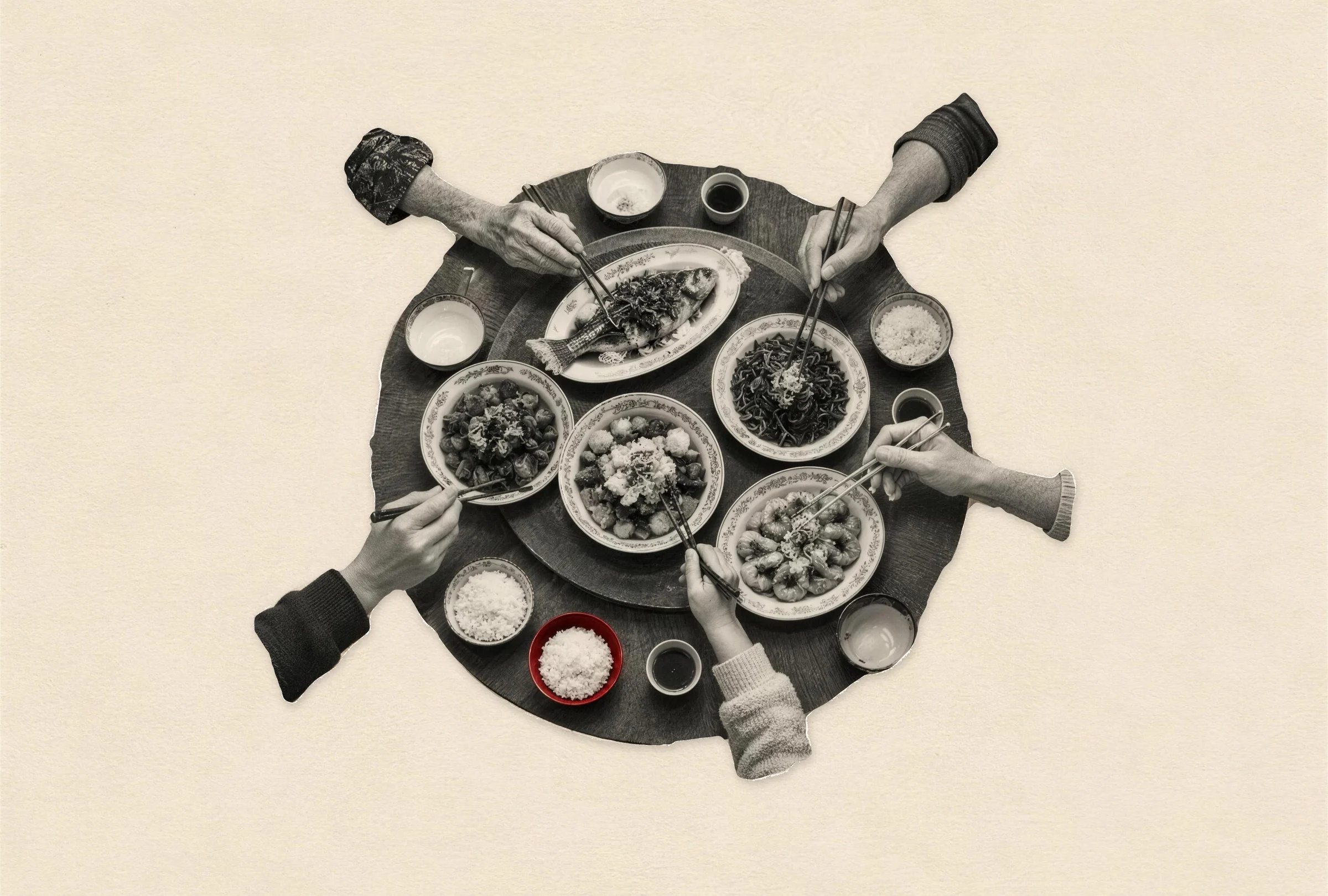
An overhead black-and-white cut-out of a round family dinner table on cream paper. Hands of every age, from an elderly grandparent’s to a small child’s, reach in with chopsticks over shared dishes of steamed fish, greens and prawns, beside small bowls of rice, one of them red.

Cantonese family terms: who is who, and what to call them

21 Oct 2026

A smiling Hong Kong market stall holder in an apron behind piles of oranges and lychees, with hand-written red price cards reading $28, $35 and $10, cut out in black and white on cream paper with a blush torn-paper patch.

6 min read

Numbers in Cantonese: counting, prices and paying like a Hong Konger

20 Oct 2026

The Cantoflow letter, sent once a month. Join and get our free tone cheat sheet. Unsubscribe any time.

© 2026 Cantoflow

Privacy policy

Terms and conditions

Cookie policy

The Cantoflow letter, sent once a month. Join and get our free tone cheat sheet. Unsubscribe any time.

© 2026 Cantoflow

Privacy policy

Terms and conditions

Cookie policy

The Cantoflow letter, sent once a month. Join and get our free tone cheat sheet. Unsubscribe any time.

© 2026 Cantoflow

Privacy policy

Terms and conditions

Cookie policy