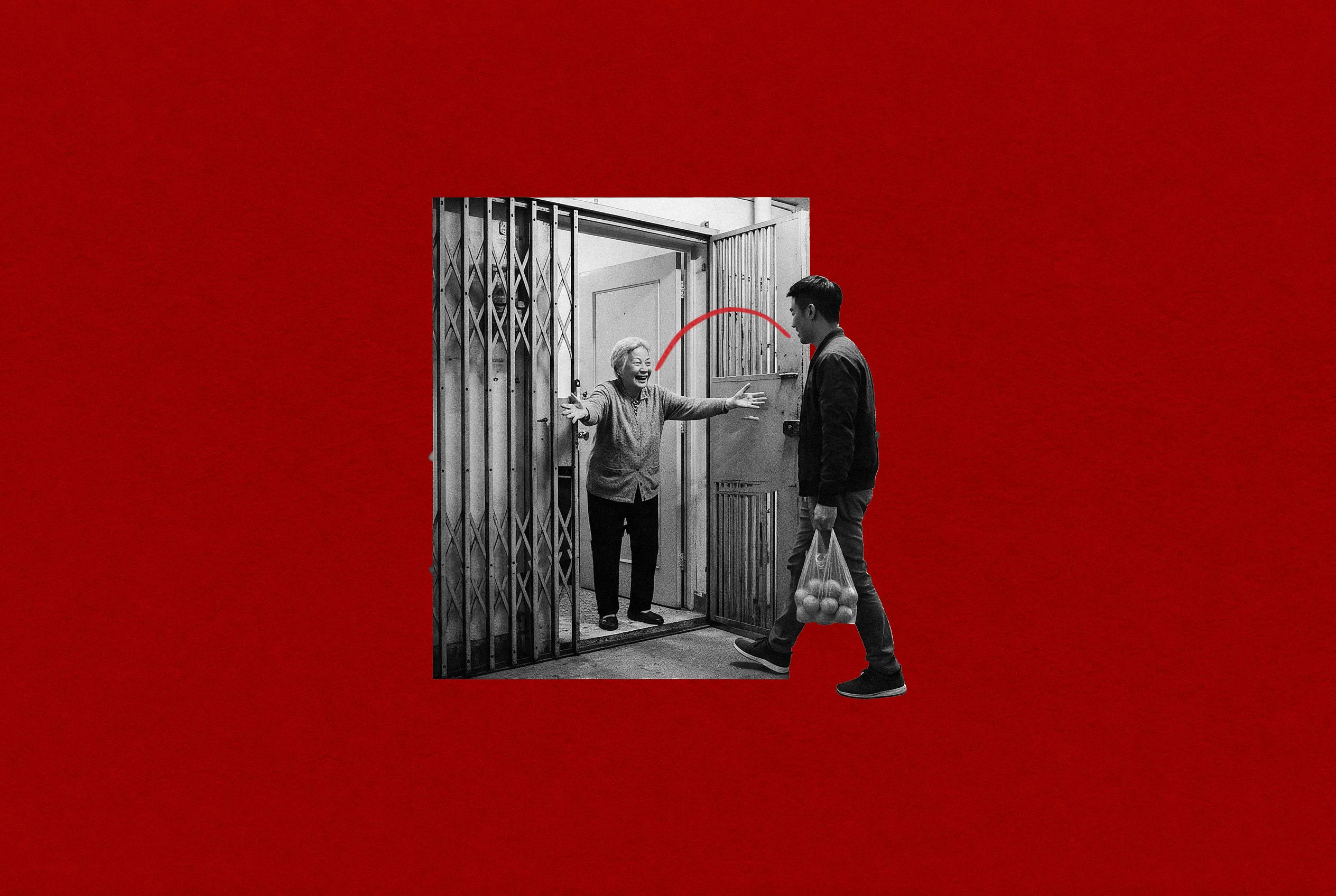
Sorry in Cantonese: how to apologise and say excuse me in Hong Kong
How to say sorry and excuse me in Cantonese: 對唔住, 唔好意思, 唔該 and 借借, when to use each, and how Hong Kongers reply to an apology.

Pardon me:
A broken bowl, carefully stitched back together: that’s what a good apology is for.
Key takeaways
Sorry in Cantonese is 對唔住 (
deoi3 m4 zyu6) when you’ve genuinely done something wrong, and 唔好意思 (m4 hou2 ji3 si1) for small slips and awkward moments.唔好意思 also doubles as “excuse me” when you approach a stranger.
To get past someone on a crowded MTR train, say 唔該借借 (
m4 goi1 ze3 ze3).The usual reply to an apology is 唔緊要 (
m4 gan2 jiu3), “it’s fine”.
There are two main ways to say sorry in Cantonese, and Hong Kongers switch between them without thinking. 對唔住 (deoi3 m4 zyu6) is a real apology: you broke something, you let someone down, you were properly late. 唔好意思 (m4 hou2 ji3 si1) is lighter: you bumped an elbow, you need someone’s attention, you feel a bit embarrassed to ask.
Add 唔該 (m4 goi1) and 借借 (ze3 ze3) for getting past people, and you have everything you need to be polite in a city of seven and a half million people packed onto pavements, trams and escalators. The Jyutping next to each phrase is the standard romanisation for Cantonese; if it’s new to you, our guide to Jyutping explains how to read it.
Common phrases for sorry in Cantonese: a quick guide
Pick the phrase that matches the situation:
Situation | Say | Jyutping |
|---|---|---|
You’ve made a real mistake | 對唔住 |
|
You bump into someone or stop a stranger | 唔好意思 |
|
You call a waiter over | 唔該 |
|
You need to squeeze past | 唔該借借 |
|
Someone apologises to you | 唔緊要 |
|
對唔住: the serious way to say sorry in Cantonese
The literal meaning of 對唔住 is something like “can’t face you”, and that tells you how it feels. It’s the word for when you owe someone an apology and the fault is yours: you spilled their drink, forgot a friend’s birthday or kept them waiting for half an hour. Saying it shows you take responsibility.
對唔住,我遲咗。(deoi3 m4 zyu6, ngo5 ci4 zo2)
Sorry, I’m late.
To make it stronger, put 真係 (zan1 hai6, “really”) in front:
真係對唔住!(zan1 hai6 deoi3 m4 zyu6)
I’m really sorry!
If you’ve learned some Mandarin, 對唔住 will look familiar. It’s the Cantonese version of Mandarin 對不起 (duìbuqǐ), with Cantonese 唔 (m4) in place of 不 for “not”. The two languages share the characters but not the sound. Using the Mandarin word in Hong Kong won’t cause offence, but it marks you out straight away.
唔好意思: sorry, pardon me and “I feel bad”
唔好意思 is the phrase you’ll hear most, and probably the most common apology in Cantonese. Its literal meaning is close to “I’m embarrassed”, which is why its usage covers so much ground. You’ll also hear the last syllable said as si3; both are fine.
As a light apology
Someone steps on your foot in a packed lift, or you step on theirs. A quick 唔好意思 is all it takes. 對唔住 would sound a little too serious for a moment like this.
Getting a stranger’s attention
When you need to ask a stranger something, such as directions, open with 唔好意思, then 請問 (cing2 man6, “may I ask”):
唔好意思,請問地鐵站喺邊度?(m4 hou2 ji3 si1, cing2 man6 dei6 tit3 zaam6 hai2 bin1 dou6)
Excuse me, where’s the MTR station?
When you didn’t catch something
This one is gold for anyone learning Cantonese. Think of it as the Cantonese “pardon?”, a polite way to ask someone to repeat themselves:
唔好意思,可唔可以講多次?(m4 hou2 ji3 si1, ho2 m4 ho2 ji5 gong2 do1 ci3)
Sorry, could you say that again?
唔好意思,我聽唔明。(m4 hou2 ji3 si1, ngo5 teng1 m4 ming4)
Sorry, I don’t understand.
Softening it with 呀
Add the particle 呀 (aa3) to the end, 唔好意思呀, and the apology sounds warmer and more sincere. You’ll hear it constantly in shops and restaurants.
唔該 and 借借: coming through
唔該 (m4 goi1) is best known as the everyday thank you, but it also works as “excuse me” when you want attention for a service: calling a waiter, stopping a bus driver, asking a shop assistant for help. Our guide to how to say thank you in Cantonese covers its other jobs.
For getting past people, Hong Kong has a phrase made for rush hour: 借借 (ze3 ze3). Translate it word for word and you get “lend, lend”, as in lend me some space.
唔該借借!(m4 goi1 ze3 ze3)
Coming through, please!
Say it as you edge towards the doors on the MTR or squeeze off a minibus, and people will shuffle aside. Saying nothing and pushing is what gets you looks.
How to reply when someone says sorry in Cantonese
The natural reply is 唔緊要 (m4 gan2 jiu3), “it doesn’t matter” or “it’s fine”. A few others are useful too:
冇事 (
mou5 si6): no worries, I’m fine. Good when a person bumps into you.冇問題 (
mou5 man6 tai4): no problem.唔使介意 (
m4 sai2 gaai3 ji3): don’t worry about it. A touch more polite, handy at work.
Here’s an example from a cha chaan teng, after a waiter brings the wrong drink:
唔好意思呀,拎錯咗。(m4 hou2 ji3 si1 aa3, ling1 co3 zo2)
Sorry, I brought the wrong one.
唔緊要!(m4 gan2 jiu3)
It’s fine!
Formal apologies in Cantonese
At work, or when you need to apologise more formally, you’ll meet a few more phrases. Our guide to Cantonese phrases for work has more for the office.
打擾晒 (
daa2 jiu2 saai3): sorry to bother you. Often paired with 唔好意思 when you interrupt someone at their desk.抱歉 (
pou5 hip3): apologies, or “I regret”. More common in emails and announcements than in talking.失陪 (
sat1 pui4): I’m afraid I must leave you. Formal and a little old-fashioned, but useful at a dinner.
Saying sorry in written form
Written Chinese in Hong Kong is closer to standard Chinese than to spoken Cantonese, so the apologies you read aren’t always the ones you hear. On signs and MTR notices you’ll see 不便之處,敬請原諒, roughly “we apologise for any inconvenience”. That’s for reading, not saying. Our piece on written Cantonese explains the gap.
Common mistakes with Cantonese apologies
Using 對唔住 for everything
對唔住 for a tiny bump sounds dramatic, as if you’d done something significant. Save it for real apologies and let 唔好意思 handle the rest.
Sticking to English
Hong Kongers do say “sorry” in English all the time, so it works. But on the MTR, 唔該借借 is what people expect, and it’s easy to say even when your Cantonese is brand new.
Mixing up the tones
唔 (m4) is a low falling tone, and it appears in three of the phrases on this page. Our guide to Cantonese tones walks through all six.
Learning Cantonese apologies that stick
Saying sorry in Cantonese isn’t hard, but it needs practice before it comes out on its own. Start with 唔好意思 and 唔該借借, because you can use both on your first day. Say them out loud, ideally with a friend or a teacher who can hear your tones, until you don’t have to think about them.
Then add 對唔住 for real mistakes and 唔緊要 for when the apology comes your way. Remember the context, not just the English meaning, and you’ll find the right phrase without stopping to translate. If you’re just starting out, our guide to learning Cantonese for beginners is a good next step.
Frequently asked questions
What is the most common way to say sorry in Cantonese?
唔好意思 is the one you’ll hear most often, because it covers small apologies and “excuse me”. 對唔住 is used when you’re at fault and want to apologise properly.
How do you say excuse me in Cantonese?
It depends on the situation. Use 唔好意思 to approach a stranger, 唔該 to get a waiter’s or shop assistant’s attention, and 唔該借借 to get past people.
Is 對唔住 the same as Mandarin 對不起?
Yes, they share the same meaning. Cantonese uses 唔 (m4) where Mandarin uses 不, and the pronunciation is quite different.
How do you respond to sorry in Cantonese?
Say 唔緊要 (m4 gan2 jiu3), “it’s fine”, or 冇事 (mou5 si6), “no worries”.
How good is your Cantonese?
Five quick questions to see where your Cantonese is at.
Question 1 of 5. The waiter brings your food. What do you say?
Heading to Hong Kong? Survival Cantonese gets you speaking the phrases you’ll actually use, in one-to-one lessons shaped around your trip.
Book a £30 trial lesson
Book a £30 trial lesson