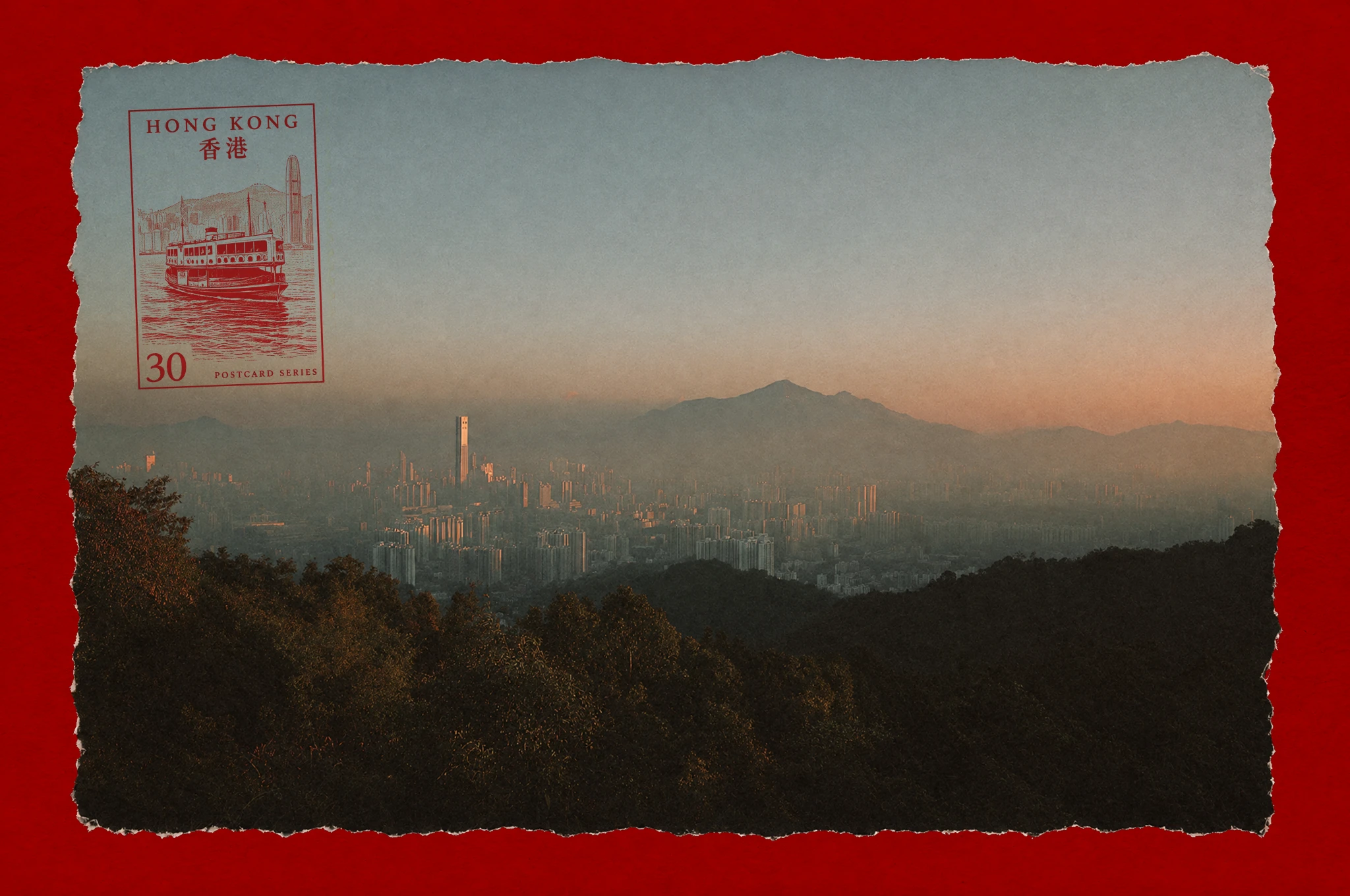
Cha chaan teng Cantonese: how to order like a local
The Cantonese you need at a Hong Kong cha chaan teng: getting a seat, set menus, milk tea shorthand like 走冰 and 飛沙走奶, and asking for the bill.

Milk tea, no ice:
Order quickly, eat quickly, leave happy. That’s the cha chaan teng way.
Key takeaways
A cha chaan teng (茶餐廳,
caa4 caan1 teng1) is Hong Kong’s everyday café: fast, crowded and cheap, with Hong Kong-style milk tea at its heart.Most food comes as a set with a drink. Say the set, then the drink, then how you want it: 一個常餐,凍奶茶 (
jat1 go3 soeng4 caan1, dung3 naai5 caa4).The drink shorthand is worth learning: 走冰 (
zau2 bing1) no ice, 少甜 (siu2 tim4) less sweet, 茶走 (caa4 zau2) tea with condensed milk.Sharing a table, 搭枱 (
daap3 toi2), is normal. A simple 可以 (ho2 ji5) is all you need.Ask for the bill with 唔該,埋單 (
m4 goi1, maai4 daan1), then usually pay at the counter on your way out.
Walking into a cha chaan teng for the first time can feel like stepping onto a conveyor belt. The menu is crowded, the staff are quick, and nobody is waiting for you to make up your mind. That’s the charm. Whether you’re visiting Hong Kong or trying a cha chaan teng in London’s Chinatown, this guide gives you the Cantonese to keep up: how to get a seat, how the set menus work, how to order your milk tea exactly the way you like it, and how to pay and leave.
What is a cha chaan teng?
A 茶餐廳 (caa4 caan1 teng1), literally a “tea restaurant”, is Hong Kong’s everyday café. The food is Hong Kong-style comfort cooking: Cantonese dishes mixed with Western ones adapted to local taste, so the same menu might offer macaroni soup, baked pork chop rice, French toast and a pineapple bun. People often shorten the name to 餐廳 (caan1 teng1). For many, the cha chaan teng is Hong Kong cuisine at its most everyday: a restaurant for breakfast before work, a quick lunch, or a cup of milk tea in the afternoon.
They grew out of the older 冰室 (bing1 sat1), “ice rooms”, which served cold drinks and snacks, and became a fixture of Hong Kong life in the decades after the war. Today you’ll find them on almost every street in the city, and in Chinatowns around the world, London included.
Expect shared tables, brisk service and plates cleared the moment you finish. Staff aren’t being rude when they’re short with you. Speed is the whole point. You’ll often get a glass of hot tea or water first, and some locals use it to rinse their chopsticks and spoon before eating.
Getting a seat
As you walk in, staff will often hold up fingers or ask 幾位? (gei2 wai2), “how many?”. Answer with the number plus 位 (wai2):
一位 (
jat1 wai2): one person兩位 (
loeng5 wai2): two people四位 (
sei3 wai2): four people
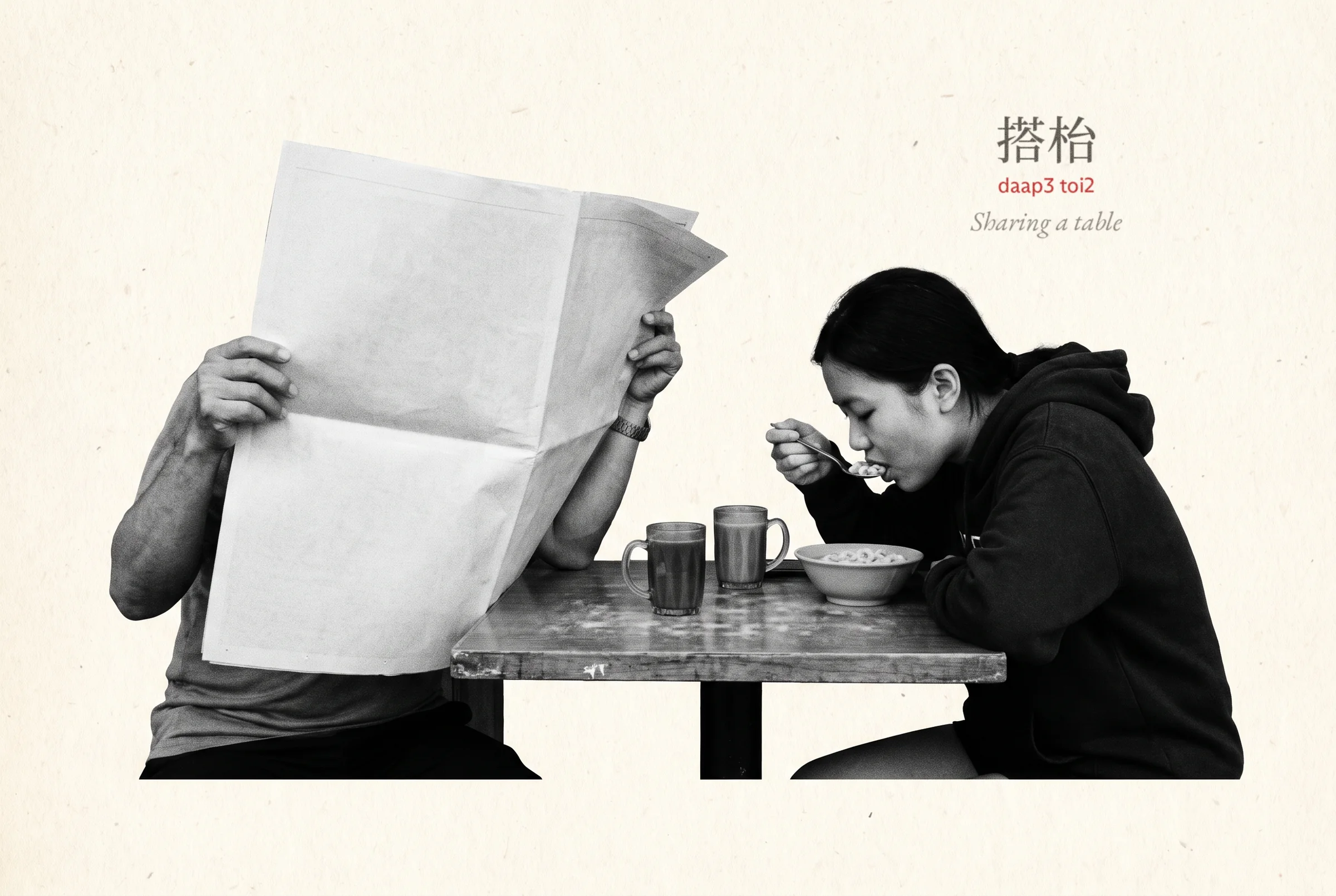
At busy times you may be asked 搭枱得唔得? (daap3 toi2 dak1 m4 dak1), “OK to share a table?”. Sharing with strangers is completely normal, so the easiest answer is 可以 (ho2 ji5), “sure”. If you’d rather wait for your own table, say 我哋等位 (ngo5 dei6 dang2 wai2), “we’ll wait for a table”.
How the set menus work
Much of the menu is sold as sets: a main dish plus a drink, sometimes with soup or toast. What’s on offer changes through the day.
Cantonese | Jyutping | English | When |
|---|---|---|---|
早餐 |
| Breakfast set | Morning |
常餐 |
| “Regular” set, usually noodles, eggs and toast | Most of the day |
快餐 |
| “Fast” set, usually a rice or noodle dish | Lunch and dinner |
下午茶 |
| Afternoon tea set | Mid-afternoon |
Many menus label their sets A, B, C, so you can simply point and say the letter: 我要A餐 (ngo5 jiu3 A caan1), “I’ll have set A”. Sets usually include a hot drink. Swapping it for a cold one, 凍 (dung3), often costs a couple of dollars more.
Dishes worth knowing by name
A cha chaan teng menu can run to pages, but even when it has no English, these dishes turn up almost everywhere:
菠蘿包 (
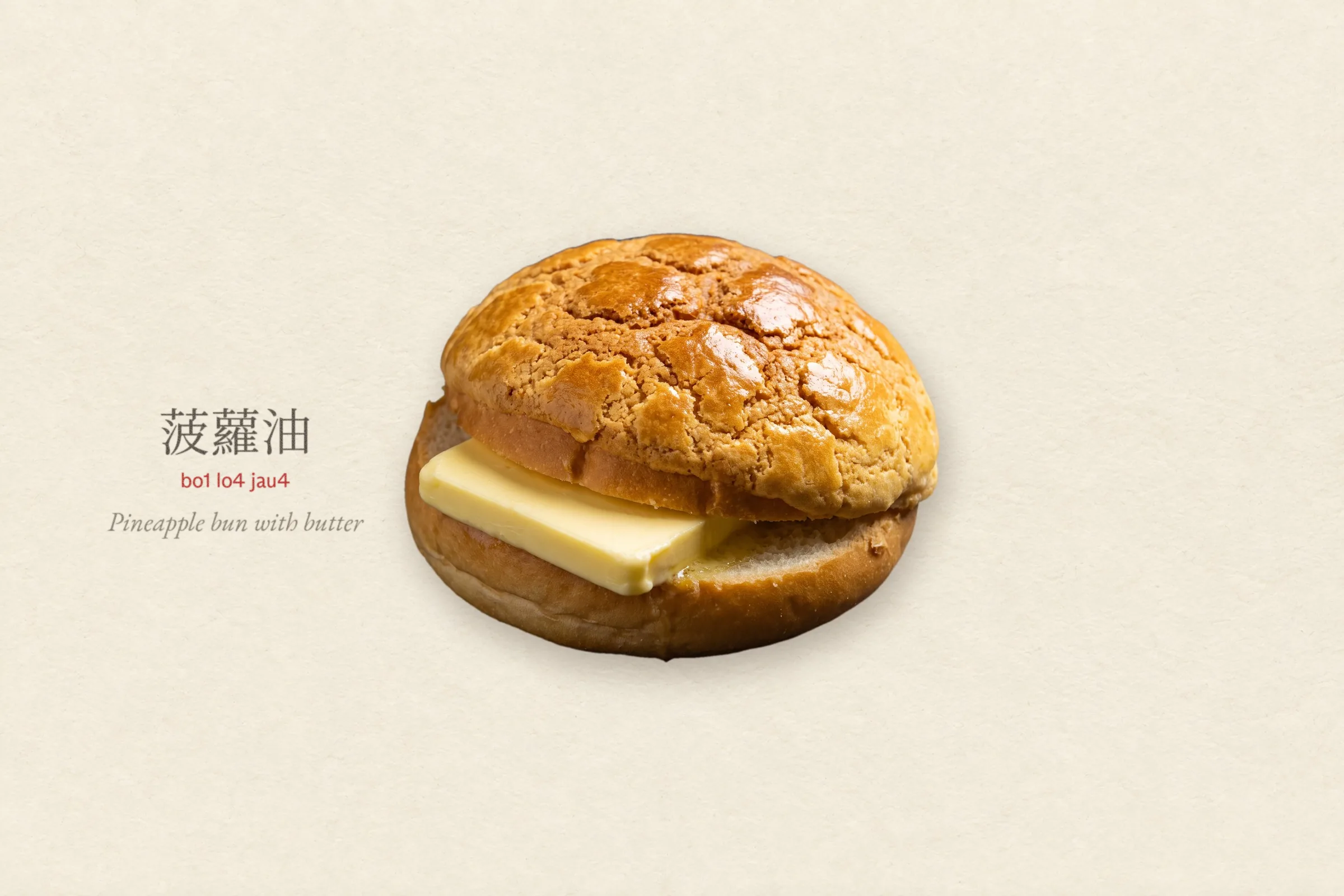
bo1 lo4 baau1): pineapple bun. There’s no pineapple in it. The name comes from the crackly, sugary crust. Ask for 菠蘿油 (bo1 lo4 jau4) and it comes split with a thick slab of cold butter.西多士 (
sai1 do1 si2): Hong Kong French toast, deep-fried, with butter and syrup.公仔麵 (
gung1 zai2 min6): instant noodles, often with luncheon meat and a fried egg. A breakfast classic.通粉 (
tung1 fan2): macaroni in clear soup, usually with ham.炒蛋多士 (
caau2 daan2 do1 si2): scrambled eggs on toast.焗豬扒飯 (
guk6 zyu1 paa2 faan6): baked pork chop rice, topped with tomato sauce and often cheese.蛋撻 (
daan6 taat1): egg tart.叉燒飯 (
caa1 siu1 faan6): roast pork on rice, often with a fried egg.三文治 (
saam1 man4 zi6): sandwiches, from ham and egg to corned beef, usually with the crusts cut off.
The basic pattern is 我要 (ngo5 jiu3), “I want”, plus the dish: 我要公仔麵,加煎蛋 (ngo5 jiu3 gung1 zai2 min6, gaa1 zin1 daan2), “instant noodles, with a fried egg”.
Milk tea and the drink shorthand
Drinks are the heart of a cha chaan teng. Hong Kong-style milk tea is strong black tea strained through a cloth filter and mixed with evaporated milk, so it comes out smooth and rich rather than milky. The filter looks a little like a stocking, which is why it’s also called 絲襪奶茶 (si1 mat6 naai5 caa4), “silk stocking milk tea”.
Cantonese | Jyutping | English |
|---|---|---|
奶茶 |
| Milk tea |
茶走 |
| Milk tea made with condensed milk instead of sugar |
檸檬茶 |
| Lemon tea |
凍檸茶 |
| Iced lemon tea |
鴛鴦 |
| Yuen yeung: coffee mixed with milk tea |
咖啡 |
| Coffee |
紅豆冰 |
| Red bean ice: sweet red beans, evaporated milk and crushed ice |
Put 熱 (jit6), hot, or 凍 (dung3), cold, in front of any of them: 熱奶茶 (jit6 naai5 caa4), 凍奶茶 (dung3 naai5 caa4). Then tweak it with the shorthand:
少甜 (
siu2 tim4): less sweet走甜 (
zau2 tim4): no sugar少冰 (
siu2 bing1): less ice走冰 (
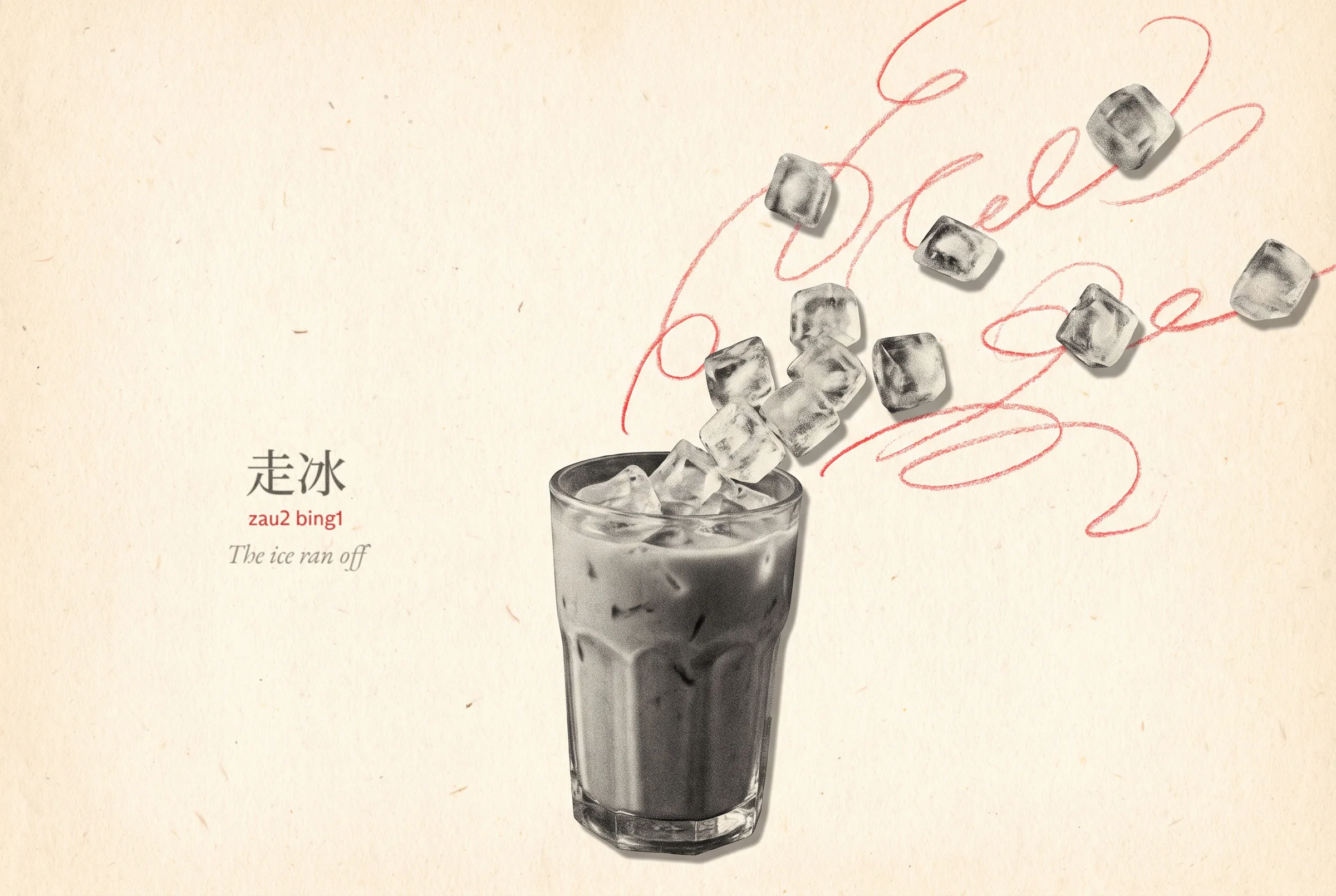
zau2 bing1): no ice
走 (zau2) literally means “run away”, so 走冰 is ice that has run off. Put it together and you get 凍檸茶,少甜,走冰 (dung3 ning4 caa4, siu2 tim4, zau2 bing1), “iced lemon tea, less sweet, no ice”.
Then there’s the famous one. 飛沙走奶 (fei1 saa1 zau2 naai5) means “no sugar, no milk”. 飛沙 is “flying sand”, a joke name for sugar. You’ll hear it with coffee and 鴛鴦, and it’s a fun one to try once you’re confident.
If you catch a glimpse of the order slip, you might see 0T scribbled on it. That’s lemon tea: zero is 零 (ling4), which is how most Hong Kongers actually pronounce the 檸 in lemon tea, and T is for tea.
Ordering, step by step
Catch someone’s eye and say 唔該,落單 (m4 goi1, lok6 daan1), “excuse me, we’d like to order”. Then go in this order: the set or dish, the drink, then how you want the drink.
Breakfast: 一個常餐,炒蛋多士,凍奶茶走冰 (jat1 go3 soeng4 caan1, caau2 daan2 do1 si2, dung3 naai5 caa4 zau2 bing1), “a regular set with scrambled egg on toast, and an iced milk tea, no ice”.
Lunch: 一個快餐,焗豬扒飯,熱檸茶 (jat1 go3 faai3 caan1, guk6 zyu1 paa2 faan6, jit6 ning4 caa4), “a fast set, baked pork chop rice, and a hot lemon tea”.
Afternoon: 一個下午茶,西多士,凍鴛鴦少甜 (jat1 go3 haa6 ng5 caa4, sai1 do1 si2, dung3 jyun1 joeng1 siu2 tim4), “an afternoon tea set with French toast and an iced yuen yeung, less sweet”.
To change something, use 加 (gaa1), add, or 走 (zau2), leave out: 加多隻蛋 (gaa1 do1 zek3 daan2), “an extra egg”, or 走蔥 (zau2 cung1), “no spring onion”. Staff will often repeat your order back at speed. Listen for the drink and the set, and if it’s right, say 係 (hai6), “yes”.
Paying and leaving
When you’re done, say 唔該,埋單 (m4 goi1, maai4 daan1), “the bill, please”. In many places the bill is a small slip left on your table, and you take it to the cashier by the door. Cash is still common, and most places also take 八達通 (baat3 daat6 tung1), the Octopus card. Cha chaan tengs aren’t places to linger, so once you’ve paid, it’s time to go.
A few phrases worth keeping in your pocket:
唔該 (
m4 goi1): please, thanks, excuse me, for service多謝 (
do1 ze6): thank you, for something given唔好意思 (
m4 hou2 ji3 si3): sorry, excuse me可唔可以講慢啲? (
ho2 m4 ho2 ji5 gong2 maan6 di1): could you speak more slowly?
Frequently asked questions
Will staff mind if my Cantonese isn’t perfect?
No. Staff hear every kind of accent. Keep it short, point at the menu as you say the name, and a simple 唔該 (m4 goi1) goes a long way. Tones do matter, so the drink names are worth practising until they come out cleanly.
What if I can’t read the menu?
Learn a handful of characters: 茶 (caa4) tea, 奶 (naai5) milk, 凍 (dung3) cold, 飯 (faan6) rice and 麵 (min6) noodles. Pointing is perfectly acceptable. You can also ask 有冇英文餐牌? (jau5 mou5 jing1 man2 caan1 paai2), “do you have an English menu?”, though smaller places often won’t.
Can I change the drink in a set?
Usually, yes. Ask 可唔可以轉凍奶茶? (ho2 m4 ho2 ji5 zyun3 dung3 naai5 caa4), “can I change to iced milk tea?”. If the answer is 得 (dak1), you’re fine. If it’s 唔得 (m4 dak1), it’s a no, so pick something else.
Do I have to share a table?
At busy times, it’s expected. If you’d rather not, say 我哋等位 (ngo5 dei6 dang2 wai2), “we’ll wait for a table”, and be ready to wait.
How good is your Cantonese?
Five quick questions to see where your Cantonese is at.
Question 1 of 5. The waiter brings your food. What do you say?
Heading to Hong Kong? Survival Cantonese gets you speaking the phrases you’ll actually use, in one-to-one lessons shaped around your trip.
Book a £30 trial lesson
Book a £30 trial lesson