Numbers in Cantonese: counting, prices and paying like a Hong Konger
How to count in Cantonese from 1 to 10 and beyond, and how Hong Kongers actually say prices, from 廿八蚊 to 三百五.

Count on it:
At the market, $28 is 廿八蚊 (jaa6 baat3 man1): “twenty-eight dollars”, said the Hong Kong way.
Key takeaways
Learn 1 to 10 and the rest of the Cantonese number system follows the same pattern, all the way up to 萬 (
maan6), ten thousand.Hong Kongers shorten numbers in speech. Twenty-something becomes 廿 (
jaa6), and prices drop their last unit, so 三百五 (saam1 baak3 ng5) means HK$350.There are two words for “two”: 兩 (
loeng5) before counted things and big units, 二 (ji6) when reciting digits.Prices are said in 蚊 (
man1), not the written 元 (jyun4), and 幾錢呀?(gei2 cin2 aa3) is the one question you need to ask what something costs.Numbers carry meaning in Hong Kong: eight is linked to prosperity and four to death, which is why some buildings have no fourth floor.
Numbers in Cantonese follow a simple base-10 pattern, so the maths is the easy part, and you can learn Cantonese numbers faster than almost anything else in the language. What trips learners up is everything around it: the tones, the shortcuts Hong Kongers use without thinking and the way prices are actually said at the till. This guide covers all of it, from one to ten through to rent, bargaining and lucky eights.
Cantonese numbers 1 to 10, and why they double as a tone drill
Everything starts here. Once these ten words are automatic, every larger number is just a combination of them, which is why learning Cantonese numbers is such a good first step if you want to learn Cantonese.
Number | Character | Jyutping |
|---|---|---|
0 | 零 |
|
1 | 一 |
|
2 | 二 |
|
3 | 三 |
|
4 | 四 |
|
5 | 五 |
|
6 | 六 |
|
7 | 七 |
|
8 | 八 |
|
9 | 九 |
|
10 | 十 |
|
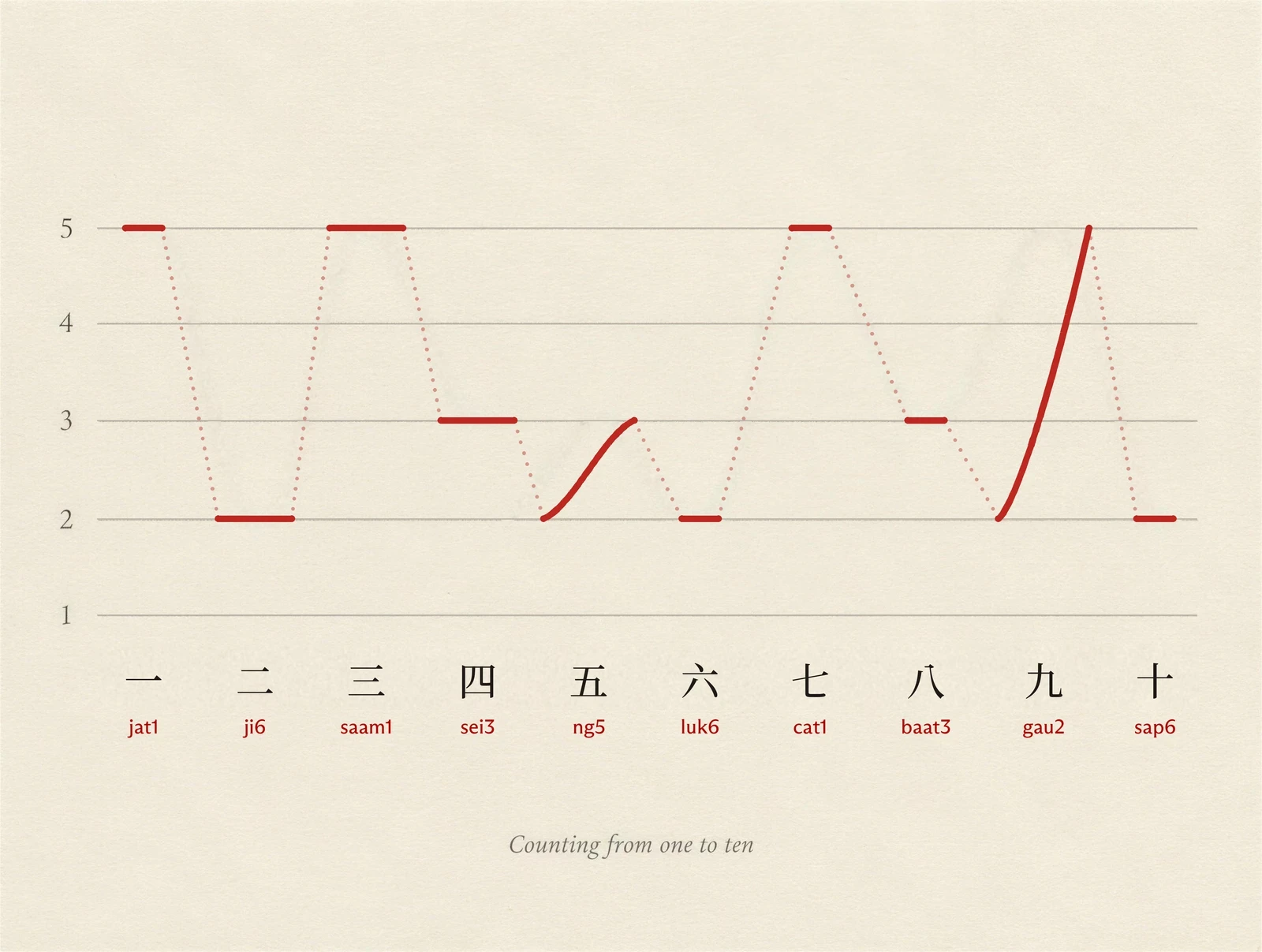
Counting from one to ten is also a free tone workout. Those ten words cover five of the six Cantonese tones: high level (一, 三, 七), mid rising (九), mid level (四, 八), low rising (五) and low level (二, 六, 十). Zero, 零 (ling4), adds the sixth, the low falling tone. Say them slowly, and you have rehearsed the whole tone system before breakfast. Our Cantonese tones guide explains each tone in more detail.
Pronunciation matters here as much as the words. Listen out for the clipped endings too. 一 (jat1), 七 (cat1) and 八 (baat3) stop on an unreleased t, 十 (sap6) stops on a p and 六 (luk6) on a k. Let those final sounds swallow themselves rather than pronouncing them fully, and you will sound far more natural.
Counting from 11 to 99, including 廿, 卅 and 卌
Cantonese builds bigger numbers like a sum you read aloud. For 11 to 19, say ten and then the second digit: 十一 (sap6 jat1) is 11, thirteen is 十三 (sap6 saam1) and 十八 (sap6 baat3) is 18.
For the tens, put the first digit in front of 十: 二十 (ji6 sap6) is 20, thirty is 三十 (saam1 sap6) and ninety is 九十 (gau2 sap6). Add the second digit on the end for anything in between, so twenty one is 二十一 (ji6 sap6 jat1). So 35 is 三十五 (saam1 sap6 ng5), 47 is 四十七 (sei3 sap6 cat1) and 88 is 八十八 (baat3 sap6 baat3).
Number | Characters | Jyutping |
|---|---|---|
11 | 十一 |
|
16 | 十六 |
|
20 | 二十 |
|
21 | 二十一 |
|
30 | 三十 |
|
52 | 五十二 |
|
99 | 九十九 |
|
That is the textbook version of Cantonese numbers. In everyday Hong Kong speech, the tens from twenty to forty get squashed:
Twenty-something becomes 廿 (
jaa6). Twenty one is 廿一 (jaa6 jat1), 25 is 廿五 (jaa6 ng5) and “twenty-odd” is 廿幾 (jaa6 gei2). Ask someone their age and you are far more likely to hear 廿五歲 (jaa6 ng5 seoi3) than 二十五歲.Thirty-something often comes out as 卅 (
saa1 aa6), literally a squashed 三十, so 32 is saidsaa1 aa6 ji6.Forty-something can become 卌 (
sei3 aa6), so 45 is saidsei3 aa6 ng5.
The full forms are always correct, so you never need to use the shortcuts yourself. You just need to recognise them, because 卅 and 卌 in particular are said fast and rarely written down.
Hundreds, thousands and 萬: counting in ten-thousands
Three more words take you from one hundred into the millions: 百 (baak3) for hundred, 千 (cin1) for thousand and 萬 (maan6) for ten thousand.
Value | Characters | Jyutping |
|---|---|---|
100 | 一百 |
|
1,000 | 一千 |
|
10,000 | 一萬 |
|
100,000 | 十萬 |
|
1,000,000 | 一百萬 |
|
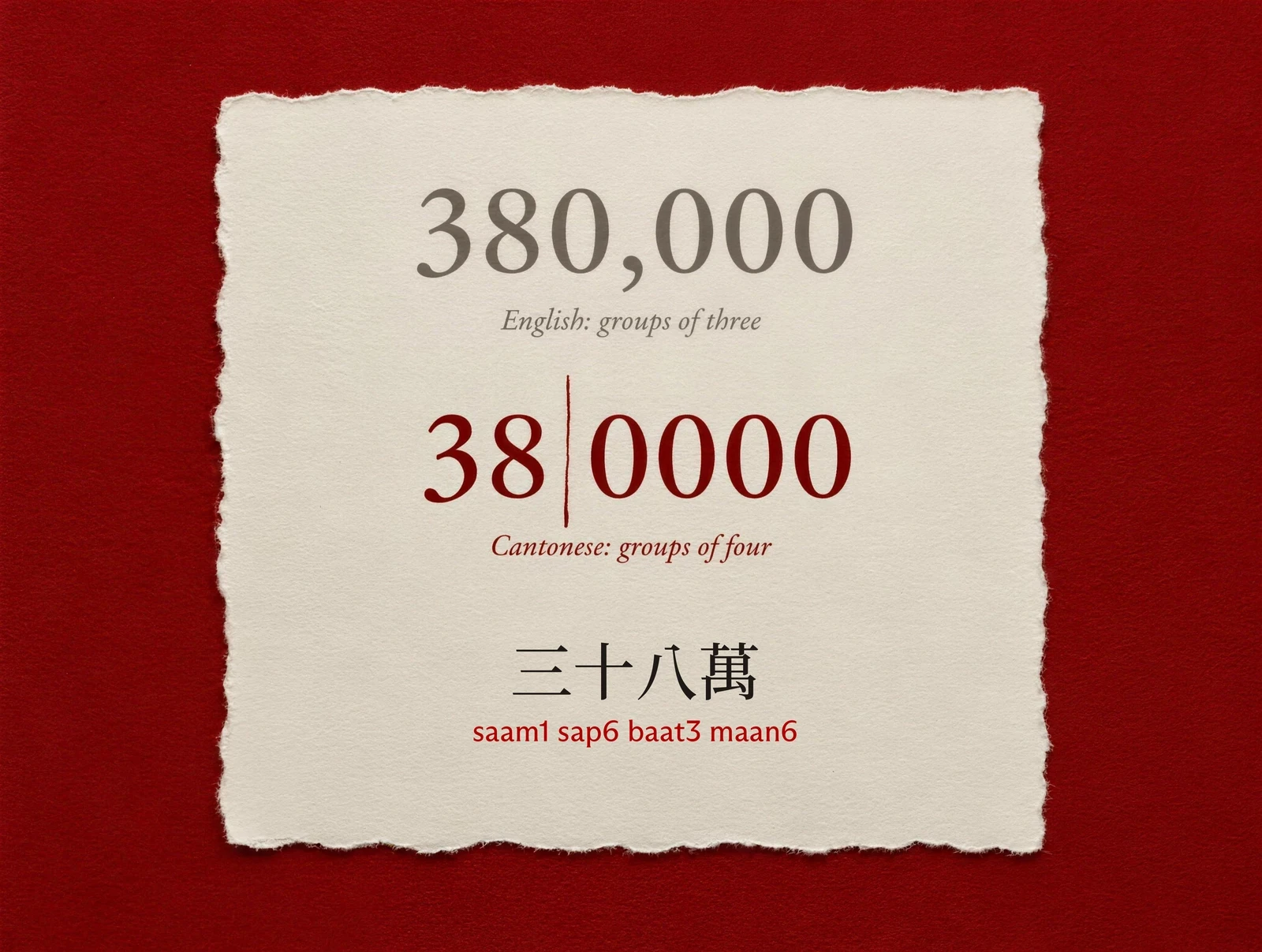
This is where English speakers find Cantonese numbers most difficult. English counts big numbers in thousands, while Cantonese counts them in ten-thousands. A hundred thousand is “ten ten-thousands”, 十萬 (sap6 maan6), and a million is “a hundred ten-thousands”, 一百萬 (jat1 baak3 maan6). Flat rents, salaries and property prices in Hong Kong are all quoted this way, so it is worth practising until it feels normal. HK$380,000 is 三十八萬 (saam1 sap6 baat3 maan6), and a monthly salary of HK$25,000 is 兩萬五 (loeng5 maan6 ng5).
When there is a gap inside a number, fill it with 零 (ling4). 207 is 二百零七 (ji6 baak3 ling4 cat1) and 5,004 is 五千零四 (ng5 cin1 ling4 sei3).
That gap rule matters because of the shortcut in the next part. Hong Kongers drop the last unit when it is obvious, which means 一百一 (jat1 baak3 jat1) is 110, not 101. If you mean 101, you need the 零: 一百零一 (jat1 baak3 ling4 jat1). The same goes for bigger figures, so 三萬一 (saam1 maan6 jat1) is 31,000.
兩 or 二? When to use which
Cantonese has two words for two, and choosing the right one is one of the quickest ways to sound less like a textbook.
Use 二 (ji6) when you are reading out digits or counting in order: phone numbers, years, flat numbers, and the 2 inside a bigger number such as 十二 (sap6 ji6, 12) or 二十 (ji6 sap6, 20). The year 2025 is 二零二五年 (ji6 ling4 ji6 ng5 nin4), and the second floor is 二樓 (ji6 lau4).
Use 兩 (loeng5) when you are counting how many of something there are, which in Cantonese means before a measure word. Two people is 兩個人 (loeng5 go3 jan4) and two cups of coffee is 兩杯咖啡 (loeng5 bui1 gaa3 fe1). It is also the everyday choice before the big units: 兩百 (loeng5 baak3) for 200, 兩千 (loeng5 cin1) for 2,000 and 兩萬 (loeng5 maan6) for 20,000.
Mix them up and people will still understand you, but it is important to get used to the difference early. 兩個人 is simply what people say, in a way that 二個人 never will.
Saying prices like a local
Hong Kong prices are written in dollars, HK$, and the written word for dollar is 元 (jyun4). The way people express money out loud is different. Nobody says it at the counter, though. In speech, a dollar is 蚊 (man1): HK$13 is 十三蚊 (sap6 saam1 man1) and HK$20 is 廿蚊 (jaa6 man1).
For anything less than a dollar, Hong Kong uses 毫 (hou4) for ten cents. Fifty cents is usually just 半 (bun3), “half”.
HK$12.40 is 十二蚊四毫 (
sap6 ji6 man1 sei3 hou4), often shortened to 十二蚊四 (sap6 ji6 man1 sei3).HK$12.50 is 十二蚊半 (
sap6 ji6 man1 bun3).HK$1.50 is 個半 (
go3 bun3), using 個 (go3) as a casual word for a dollar.
Then comes the shortcut that confuses visitors most. Just as with 一百一, Hong Kongers drop the final unit when the listener can fill it in. A stallholder who says 三百五 (saam1 baak3 ng5) means HK$350, not HK$305. 兩千八 (loeng5 cin1 baat3) is HK$2,800.
Here is how a few example amounts are said:
Item | Price | Said as |
|---|---|---|
MTR fare | HK$13 | 十三蚊 ( |
Hong Kong milk tea | HK$22 | 廿二蚊 ( |
Set lunch | HK$68 | 六十八蚊 ( |
Market bargain | HK$350 | 三百五 ( |
A good habit is to pick any Hong Kong menu online and read each item out loud the way a waiter would, with 蚊 on the end.
Asking the price and paying in Cantonese
Numbers only become useful once you can ask for them. The key question is 幾錢呀?(gei2 cin2 aa3), “How much is it?” The 呀 (aa3) on the end softens it into a friendly question. To point at something specific, say 呢個幾多錢呀?(ni1 go3 gei2 do1 cin2 aa3), “How much is this one?”
A few phrases to go with it:
我要呢個 (
ngo5 jiu3 ni1 go3): “I’ll have this one.”平啲得唔得?(
peng4 di1 dak1 m4 dak1): “Could you do it a bit cheaper?” This works at street markets, not in shops with fixed prices.唔該埋單 (
m4 goi1 maai4 daan1): “The bill, please.” You will hear this every few minutes in a cha chaan teng.
Most Hong Kongers pay for small things with the 八達通 (baat3 daat6 tung1), the Octopus card. To check whether a shop takes it, ask 收唔收八達通呀?(sau1 m4 sau1 baat3 daat6 tung1 aa3). When your card runs low, you 增值 (zang1 zik6), top it up, at a convenience store or MTR machine.
Here is how a quick exchange at a market stall might go:
You: 呢件衫幾錢呀?(ni1 gin6 saam1 gei2 cin2 aa3) “How much is this top?”
Seller: 六十蚊。(luk6 sap6 man1) “Sixty dollars.”
You: 五十蚊得唔得?(ng5 sap6 man1 dak1 m4 dak1) “Would fifty work?”
Seller: 好啦。(hou2 laa1) “Go on, then.”
Lucky and unlucky numbers in Hong Kong
In Hong Kong, numbers carry meaning because of what they rhyme with. It makes sense once you hear the pairs side by side.
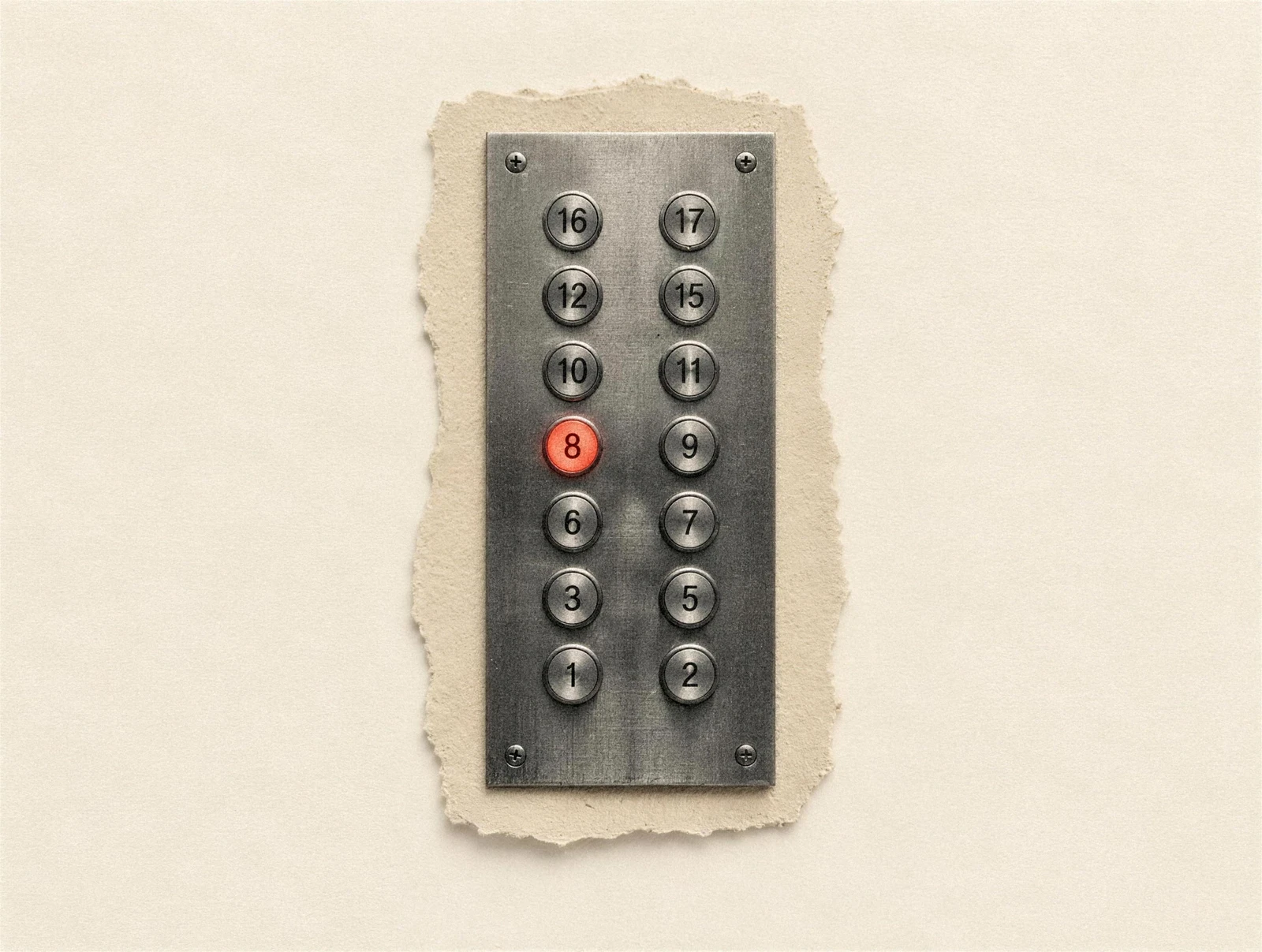
Eight is lucky. 八 (baat3) sounds close to 發 (faat3), as in 發財 (faat3 coi4), “to get rich”. Car registration marks full of eights fetch serious money at government auctions, and you will see prices like HK$88 and HK$888 everywhere.
Four is unlucky. 四 (sei3) sounds like 死 (sei2), “to die”. Many residential buildings skip floors with a four in them, and flat numbers ending in four can be harder to sell or let.
A few more examples to recognise:
三 (
saam1) is close to 生 (saang1), “life”, so three is generally a good number.九 (
gau2) is a homophone of 久 (gau2), “long-lasting”, which makes it popular for anniversaries and weddings.168 is heard as 一路發 (
jat1 lou6 faat3), “prosperity all the way”, and turns up in shop names and phone numbers.
Numbers are also baked into Hong Kong slang. Our Cantonese slang guide covers the ones you will hear on the street.
How to learn Cantonese numbers and make them stick
Cantonese numbers stick through use, not memorisation. A few small habits make a big difference:
Read receipts aloud. Supermarket receipts, menus and price tags are perfect practice, especially with 蚊 and the dropped final unit.
Say your own numbers. Your phone number, read digit by digit with 二 rather than 兩, your rent and your birthday. A UK mobile starting 07912 is 零七九一二 (
ling4 cat1 gau2 jat1 ji6).Say the date. Cantonese dates run from big to small: year, month, day. 2025年10月20號 is 二零二五年十月二十號 (
ji6 ling4 ji6 ng5 nin4 sap6 jyut6 ji6 sap6 hou6).Listen for 廿 and the dropped units. Hong Kong TV, YouTube vlogs and street interviews are full of them.
The hard part is hearing numbers at full speed, in a noisy restaurant, from someone who is not slowing down for you. That is exactly what one-to-one practice is for. On Cantoflow’s Survival Cantonese pathway, a native Hong Kong tutor works through the real situations you will face, from ordering and paying to asking for directions, and corrects your tones as you go. Book a trial lesson and try your numbers out loud with someone who will tell you how they sound.
FAQ
How do you say numbers in Cantonese from 1 to 10?
一 (jat1), 二 (ji6), 三 (saam1), 四 (sei3), 五 (ng5), 六 (luk6), 七 (cat1), 八 (baat3), 九 (gau2), 十 (sap6). Zero is 零 (ling4).
Are Cantonese numbers the same as Mandarin numbers?
The characters are the same, but the pronunciation is completely different. Three is saam1 in Cantonese and sān in Mandarin, for example. Hong Kong Cantonese also has spoken shortcuts like 廿 (jaa6) and money words like 蚊 (man1) that you will not learn in a Mandarin class. Our guide to Cantonese or Mandarin compares the two in more depth.
Do I need to learn Jyutping to learn Cantonese numbers?
You can learn the words by ear, but Jyutping makes the tones far easier to remember. It is what tells 四 (sei3), four, apart from 死 (sei2), to die. Our Jyutping guide is a good place to start.
How long does it take to learn Cantonese numbers?
Most learners are comfortable with 1 to 100 after a week or two of daily practice. Understanding prices said at full speed takes longer, because that is a listening skill as much as a vocabulary one. Regular speaking practice is the quickest way to close that gap.
How good is your Cantonese?
Five quick questions. You’ll see your score straight away.
Question 1 of 5. The waiter brings your food. What do you say?
Heading to Hong Kong? Survival Cantonese gets you speaking the phrases you’ll actually use, in one-to-one lessons shaped around your trip.
Book a £30 trial lesson
Book a £30 trial lesson